Market Bias
Neutral-to-Bearish (Short-Term) — Price is trapped in a strong downtrend below all major moving averages, though oversold RSI levels suggest potential relief rallies; macro fundamentals remain mixed with sticky inflation preventing aggressive Fed cuts.
Executive Summary
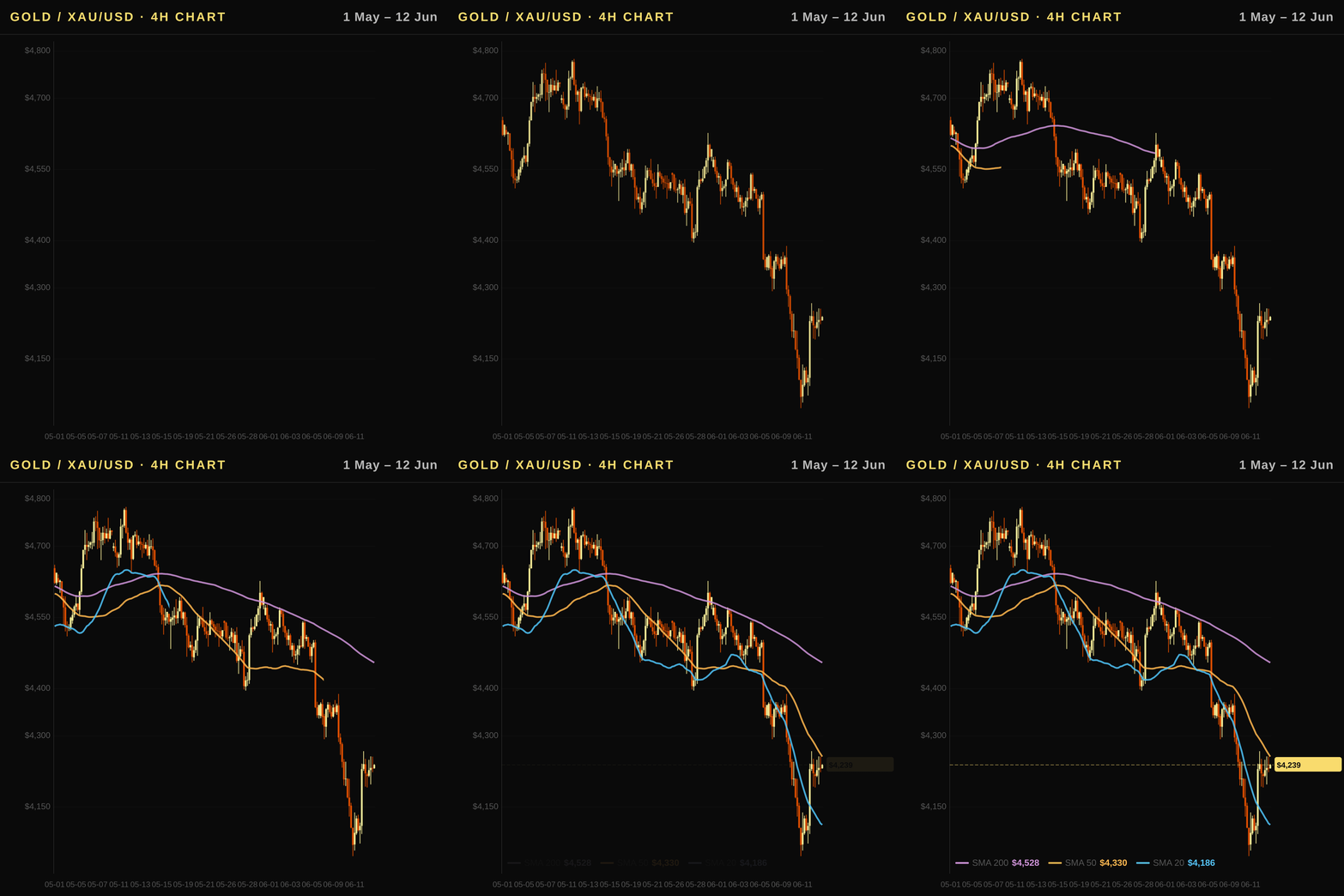
Gold has capitulated into a pronounced correction, retreating nearly 10% over the past month to test critical psychological support near $4215 after failing to reclaim key moving averages above $4430. While speculative futures positioning remains notably bullish and central bank demand provides a structural floor, persistent inflation data and rising Treasury yields are capping upside momentum. The market is currently digesting the divergence between aggressive seller sentiment in ETFs versus contrarian longs on COT reports, creating volatile trading conditions ahead of major macro releases later this month.
US Outlook: Fed Policy, Real Rates, and Gold's Safe-Haven Premium
The Federal Reserve's current stance is the dominant macro variable shaping gold's trajectory in mid-2026. With the Fed Funds Rate at 3.63% — trending lower but still restrictive — markets are pricing in a gradual easing cycle. However, with CPI at 4.27%, the Fed cannot cut aggressively without risking re-acceleration of inflation, keeping real rates elevated and gold under structural pressure.
Real rates (TIPS) remain the true competition for gold: at 2.16% on the 10-year TIPS, investors earn a meaningful inflation-adjusted return from US Treasuries — a genuine alternative to a zero-yield asset. Historically, gold struggles when TIPS yields exceed 1.5%; at 2.16%, this headwind is significant and explains much of the current downtrend.
Gold's safe-haven premium is partially intact due to ongoing geopolitical tensions, but the relatively low VIX (17.68, -17.81% weekly) and equity resilience (SPX +0.65% weekly) signal that risk appetite has not collapsed, reducing urgency for defensive gold allocations.
Dollar dynamics: DXY at 99.75 (-0.32% weekly) provides a modest tailwind, but until the Fed pivots more decisively dovish, dollar resilience backed by positive real rates continues to cap meaningful gold upside.
Technical Analysis
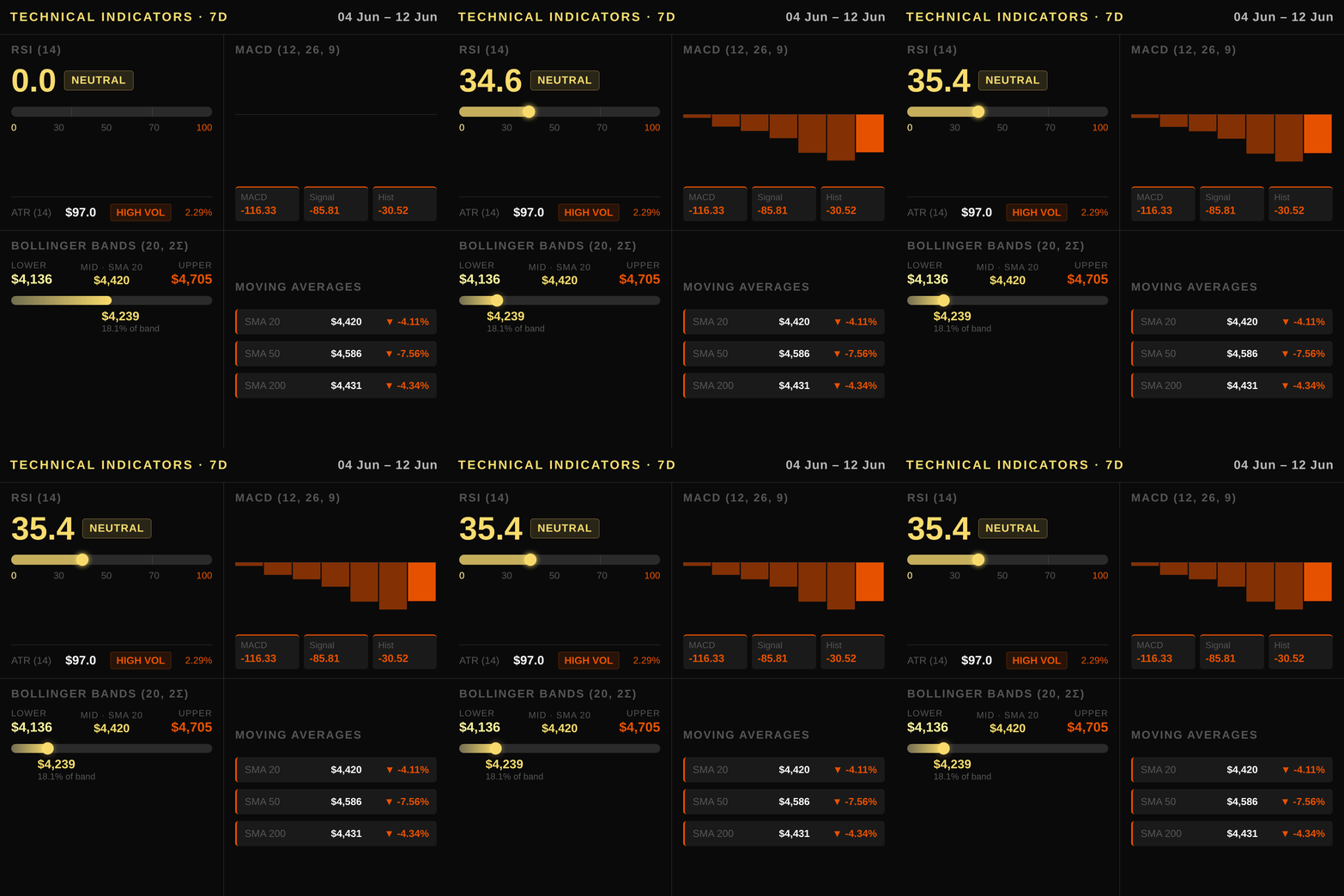
- Price Action & Trend: XAU/USD is executing a structured sell-off, having lost its uptrend as price closes firmly below the critical trendline connecting recent highs. The asset has rejected multiple attempts to reclaim territory above $4300 and is now trading well beneath its 20-day Simple Moving Average (SMA) of $4420.
- Moving Averages: The technical landscape confirms a dominant bearish structure with price sitting below the SMA 50 ($4586) and the long-term SMA 200 ($4431). These averages now act as immediate dynamic resistance zones that must be cleared for any trend reversal.
- RSI & MACD: The RSI (14) has readjusted to 35.4, indicating oversold territory but not yet a confirmed bullish divergence, suggesting further downside is possible before a bounce occurs. The MACD histogram shows negative momentum at -30.52, with the signal line (-85.81) remaining below the MACD level (-116.33), reinforcing the bearish bias despite the slowing rate of decline.
- Bollinger Bands & Volatility: Price is hovering near the lower Bollinger Band ($4136), which often acts as a magnet or support in ranging markets, though volatility remains elevated with an ATR of 97. This suggests that sharp intraday swings are likely until a definitive trend shift occurs.
- Key Levels: Immediate resistance sits at $4280 (recent consolidation), followed by the heavy overhead supply zone between $4431 and $4586. The primary support floor is established near $4031, with breakdowns below this level opening a path toward deeper corrections into low 3900s.
Macro & Fundamental Drivers
- Fed Policy & Real Rates: The Federal Funds Rate stands at 3.63%, having ticked down slightly from year-ago levels, yet the environment remains restrictive for non-yielding assets like gold. Crucially, real interest rates (TIPS) have risen to 2.16% on a yearly basis, increasing the opportunity cost of holding gold and weighing heavily on demand.
- USD & Yield Correlations: The U.S. Dollar Index is trading at 99.75, showing resilience despite recent weekly dips. This strength correlates directly with Gold's weakness; as yields climb to 4.48% for the 10-year Treasury, the dollar strengthens, creating a headwind for precious metals prices.
- Inflation Backdrop: Inflation remains sticky at 4.27%, preventing investors from pricing in an immediate dovish pivot by the Fed. This persistence keeps real yields elevated and dampens gold's appeal as an inflation hedge compared to hard assets that offer yield or growth potential.
- Geopolitical Premium: While geopolitical tensions provide a baseline demand for safe havens, ongoing geopolitical tensions — including the Iran situation — continue to provide a baseline safe-haven bid for gold, even as elevated real rates remain the primary headwind limiting upside.
Market Positioning & Flows
- COT Report: The latest CFTC report dated June 9 reveals a stark divergence: non-commercial net positioning is heavily bullish at +173,837 contracts, up by over 2,000 contracts in five weeks. This contrarian read suggests institutional and hedge fund managers are accumulating positions despite the technical weakness, hinting that current prices may represent an attractive entry point for smart money.
- ETF Flows: Conversely, exchange-traded funds continue to drain liquidity with a monthly outflow of approximately $2 billion (16 tonnes sold). This institutional selling pressure is exacerbating the price decline and indicates retail or smaller investors are stepping in while large-scale allocators reduce exposure.
- Central Bank Context: While specific 2025-2026 buying data isn't fully detailed for this month, global reserves held by top nations total approximately 35,000 tonnes historically, providing a long-term floor that prevents catastrophic crashes even during short-term bear markets driven by ETF flows.
Correlated Assets
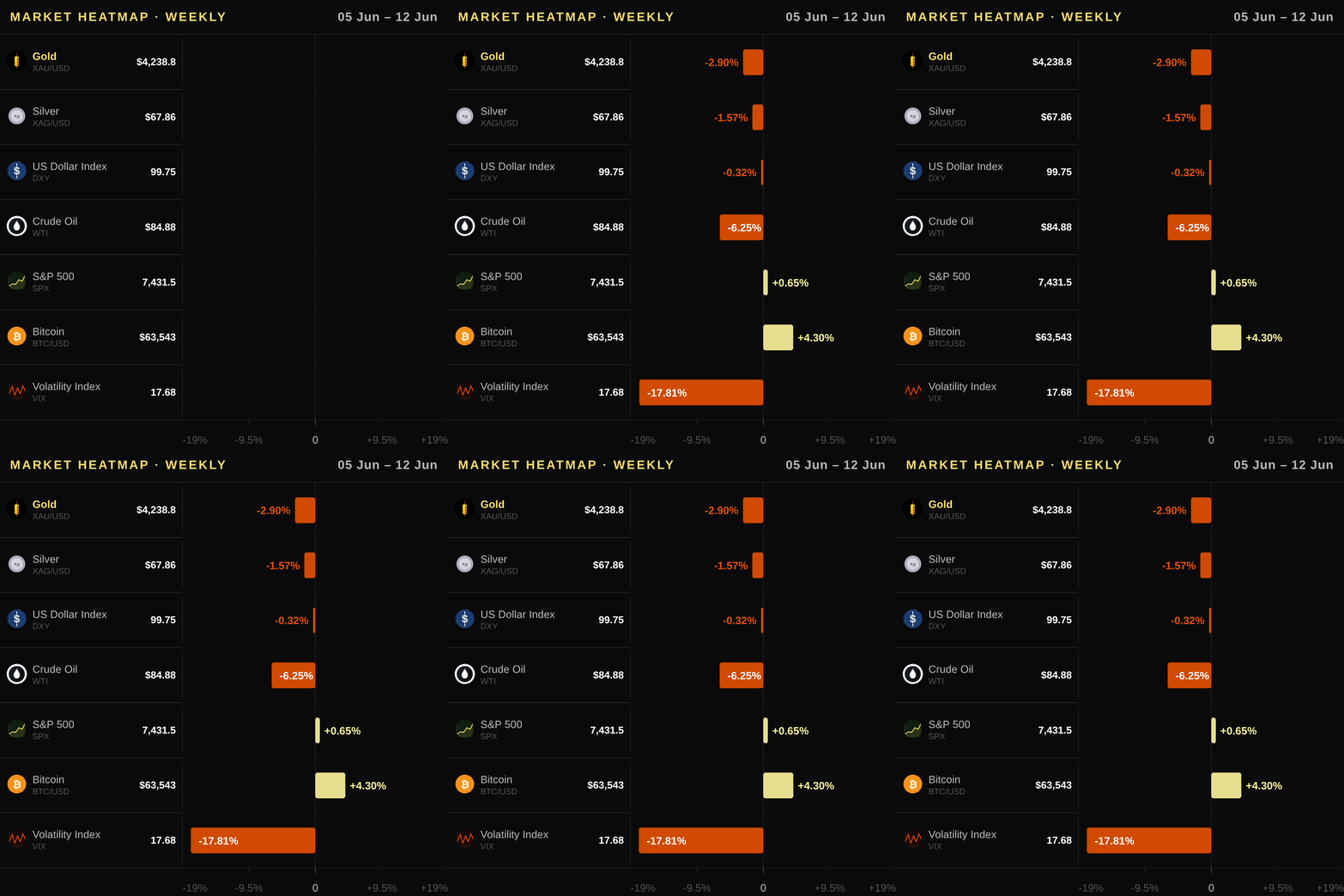
- DXY & US10Y: The dollar's strength at near 99.75 and the Treasury yield rise to 4.48% are primary drivers of gold's decline; a weaker USD or falling yields would be required for sustained rallies.
- Silver & Copper: Silver is underperforming significantly with a monthly decline of -20.1% — its worse comparative performance to gold signals stress in industrial demand. Copper at $6.43/lb (+2.67% weekly) shows resilient manufacturing activity, providing little gold support but also no macro collapse signal.
- WTI Crude: Oil fell -6.25% weekly to $84.88, reducing the energy-risk premium embedded in commodities and softening gold's commodity-complex tailwind.
- VIX: The volatility index dropped -17.81% weekly to 17.68, indicating low near-term fear — a headwind for gold as a flight-to-safety trade.
- S&P 500: Equities gained +0.65% weekly to 7,431, confirming risk-on sentiment that historically pressures gold allocations.
Upcoming Catalysts
- US GDP — 2026-06-25
- Non-Farm Payrolls (NFP) — 2026-07-02
Trading Idea
Given the bearish technical setup — price below all key moving averages, RSI 35.4 in oversold territory, MACD histogram at -30.52 — a cautious short or wait-for-confirmation approach is preferred. A tactical short can be considered on any technical bounce toward $4,280–$4,350 (near the recent consolidation zone), with a stop-loss above $4,450 to limit exposure. The primary downside target is $4,031 (60-day low structural support). For long-term accumulation buyers, staged entries near the Bollinger Lower Band at $4,135.8 offer a technically defined risk level. US investors can access gold via GLD or IAU ETFs on NYSE Arca, or COMEX futures (GC) via major brokers.
Price Outlook and FAQ
Tomorrow's price is expected to trade between $4,105 and $4,325 USD, with the weekly bias remaining bearish absent a significant macro catalyst shift.
What is driving gold lower despite persistent geopolitical risks? Rising real interest rates (TIPS at 2.16%) are the primary headwind — when US Treasuries offer positive inflation-adjusted yields, the opportunity cost of holding non-yielding gold increases, reducing institutional demand even when geopolitical risks persist. ETF outflows of $1.994B in the latest monthly report confirm institutional de-risking.
How do Fed rate expectations affect gold's outlook? Gold typically benefits from Fed rate cuts, which reduce real yields and weaken the dollar. With the Fed Funds Rate at 3.63% and CPI at 4.27%, the Fed has limited room to cut aggressively. Any hint of a dovish pivot in upcoming FOMC statements or weaker-than-expected NFP data could trigger a sharp gold rally from current oversold levels.
How can US investors buy gold today? The most accessible options are ETFs: GLD (SPDR Gold Shares) and IAU (iShares Gold Trust) trade on NYSE Arca with high liquidity and tight spreads. Physical gold is available via APMEX, JM Bullion, or the US Mint. Futures traders can access COMEX gold contracts (GC) via Interactive Brokers, TD Ameritrade, or similar platforms.
This article is for informational purposes only and does not constitute investment advice or a financial recommendation. Investing in financial assets involves risk.
Key Takeaways for Traders
- Market position: Bearish — price is below SMA20 ($4,420), SMA50 ($4,586), and SMA200 ($4,431); the trend is down until price reclaims SMA20 on a sustained closing basis.
- Critical technical level: Watch $4,031 (60-day low) as the final structural support; a sustained close below opens a path toward the $3,900–$3,950 area.
- Primary macro driver: Real rates (TIPS at 2.16%) are the central headwind; watch the next CPI print and FOMC language for a pivot signal that could reverse the downtrend.
- Flow signal: ETF outflows of $1.994B/month confirm institutional de-risking; COT net long positioning at +173,837 suggests smart-money optimism for a medium-term recovery once rates peak.
- Risk management: Oversold RSI (35.4) near Bollinger Lower Band ($4,135.8) raises the risk of a sharp short-squeeze — keep position sizes conservative and stops tight above $4,280 on any short.
