Market Bias
Neutral-to-Bearish. Gold is currently trapped in a strong downtrend, pressured by rising nominal yields that outpace inflation while significant ETF net outflows of over $2 billion drain liquidity from exchange-traded funds this month. The price action remains subdued as the metal tests critical moving average support levels below its 50-day and 20-period averages, with technical momentum skewed negative across RSI and MACD indicators despite a modest speculative long build in futures positioning that contradicts the immediate bearish price trend.
Executive Summary
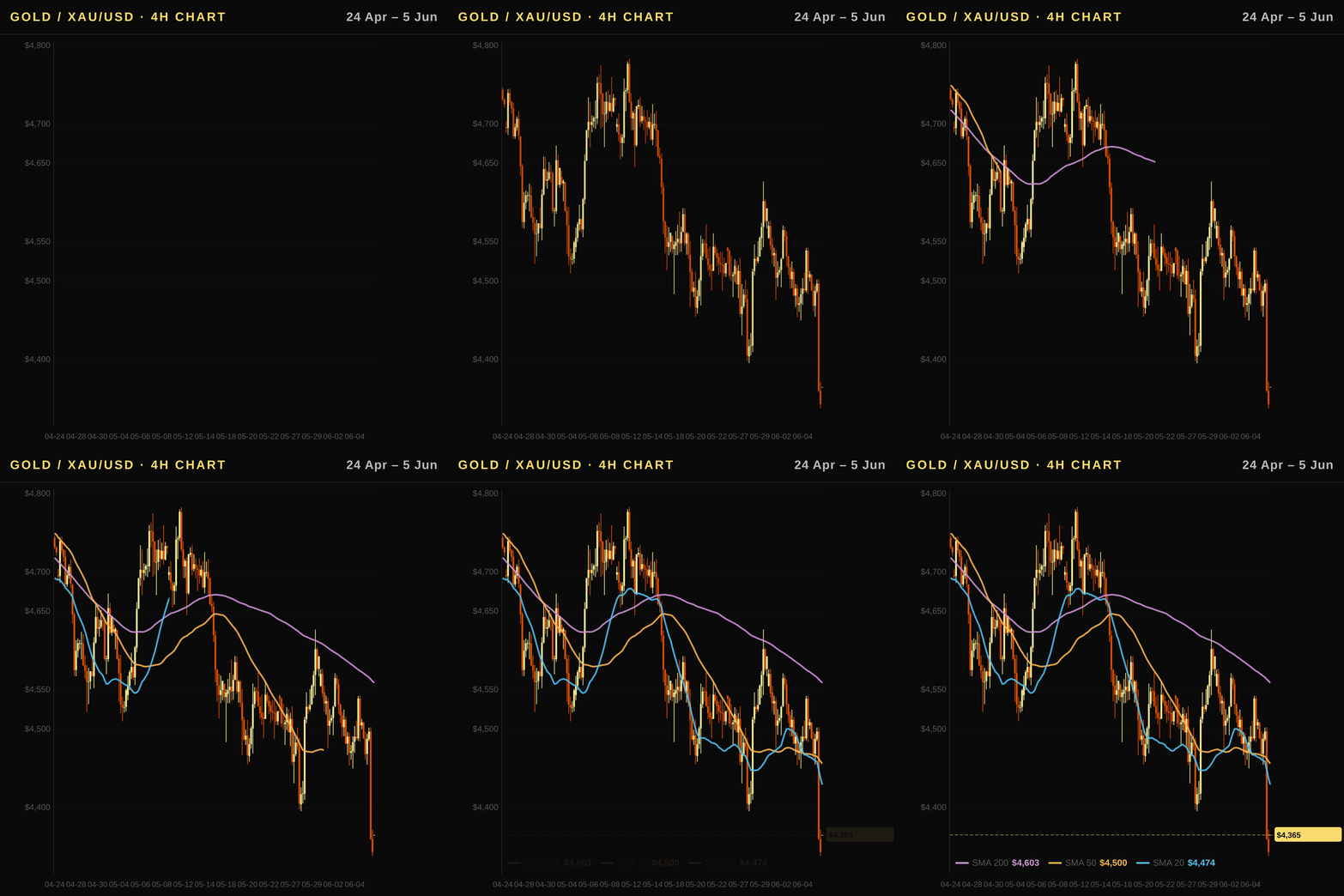
The gold price today in USD is trading at $4,365.30 amidst a significant short-term correction that has erased over 7% of gains from the past month, driven by a strengthening dollar and rising real yields. While institutional selling pressure via ETF outflows totaling more than $2 billion this month suggests immediate caution, long-term structural support remains intact due to persistent central bank demand for XAU/USD as a geopolitical hedge against ongoing global instability. Investors should remain vigilant as the market digests negative weekly momentum while looking ahead to upcoming inflation data that could reverse current bearish sentiment if price action stabilizes near key technical levels before Friday's release.
US Outlook: Fed Policy, Real Rates, and Gold's Safe-Haven Premium
- The Federal Reserve Funds Rate has eased to 3.64% from a year ago level of 4.33%, reflecting a pivot toward lower borrowing costs that historically supports non-yielding assets like gold. However, the 10Y Treasury Yield remains elevated at 4.48%, keeping nominal bond yields attractive and complicating the case for immediate price rallies despite recent rate cuts.
- Crucially, real interest rates are neutral to slightly bearish for gold; the 10Y Real Rate (TIPS) sits steady at 2.11% versus a prior year level of 2.13%. Since this metric represents the true opportunity cost of holding non-income-generating bullion, any further rise would suppress demand, whereas stability allows technical buyers to step in near support levels.
- The DXY has strengthened by 1.85% over the last month to trade at 100.07, making gold more expensive for holders of other currencies and dampening global physical demand outside of non-US markets. This dollar strength contrasts with falling real rates, creating a mixed macro backdrop where safe-haven flows compete against yield-driven selling pressure from institutional portfolios.
- Forward guidance suggests the Fed will maintain a patient stance if inflation remains near its 3.95% annual target; this dovish posture limits aggressive rate hikes but also prevents a rapid normalization that could trigger a sharp decline in real yields and ignite a gold bull market before central bank policy fully aligns with softer growth data.
Technical Analysis
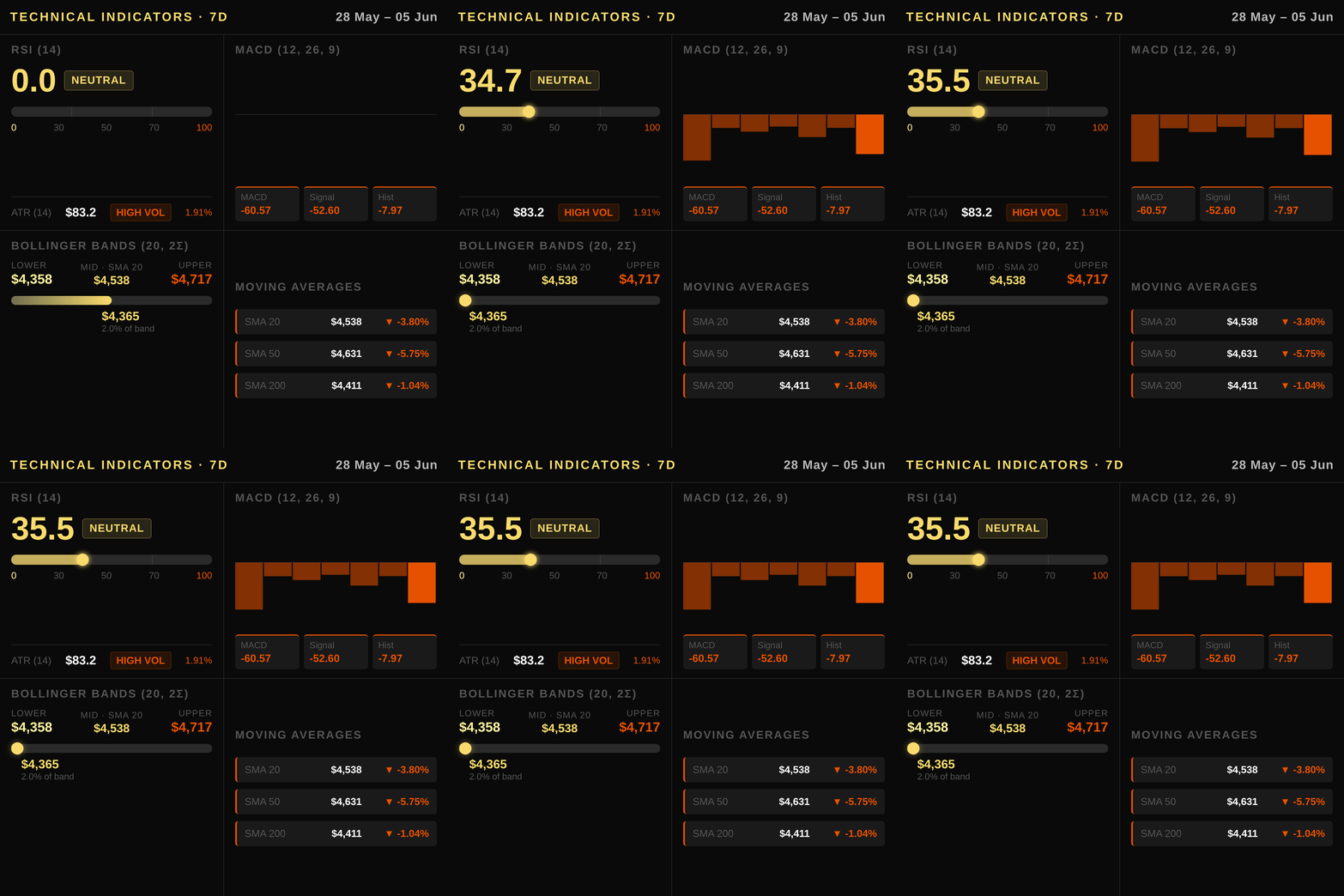
Gold price today action reflects a clear strong downtrend, currently trading at $4365.3, well below key moving averages that act as dynamic selling pressure zones. The SMA 20 sits at $4537.6, while the SMA 50 is positioned higher at $4631.4 and the long-term SMA 200 rests near $4411.3. Price remains trapped between these descending averages, confirming bearish momentum as every bounce toward the middle Bollinger Band fails to sustain above the upper channel limit of $4717.2. The RSI (14) reading of 35.5 indicates oversold conditions but lacks sufficient strength for a confirmed reversal, while the MACD histogram at -7.97 shows bearish momentum is still building despite the signal line crossover occurring earlier in June. Volatility measured by an ATR of 83.2 suggests broad price swings are expected near current levels, with immediate support found around the 60-day low at $4100.8. Resistance looms significantly ahead at the 60-day high level of $5017.6, which investors must clear to invalidate the prevailing bearish technical structure. The lower Bollinger Band sits at $4358.0 and acts as a critical floor where buying interest may temporarily emerge before downside pressure resumes from above.
Macroeconomic Factors
The Federal Reserve funds rate has recently declined to 3.64%, yet market expectations for further cuts remain cautious amid sticky inflation readings of 3.95% year-over-year. This divergence keeps real rates, currently anchored at 2.11% via TIPS yields, from falling sharply enough to trigger a strong rally in gold prices today. A nominal US 10Y Treasury yield sitting near 4.48% further constrains the asset by raising its opportunity cost for investors seeking non-yielding returns. The US dollar index (DXY) has strengthened this week with gains of 1.17%, which directly suppresses global demand as gold becomes more expensive for international buyers holding other major currencies. Despite these headwinds, geopolitical tension in the Middle East continues to provide a persistent risk-off premium that partially offsets higher real yields and dollar strength. Recent headlines highlight how investor sentiment shifts rapidly between fear of economic instability and concern over central bank tightening cycles, creating volatility around gold’s safe-haven bid.
Positioning and Market Flows
The CFTC report indicates a net non-commercial long position of 176,020 contracts in gold futures, reflecting continued speculative bullishness despite recent price declines over the past month. However, this optimism contrasts sharply with commercial hedgers maintaining a significant short stance of -206,345 contracts to manage production risk.
Institutional demand via exchange-traded funds has turned negative, as net outflows totaling $-2 billion in May suggest investors are reducing exposure despite the asset's strong annual performance. This divergence highlights a disconnect between retail-driven futures positioning and broader institutional sentiment favoring yield-bearing assets or other stores of value at current valuations.
Central bank demand continues to provide structural support for prices, with global reserves remaining elevated even as private sector flows fluctuate weekly based on rate expectations and macro data releases.
Correlated Assets
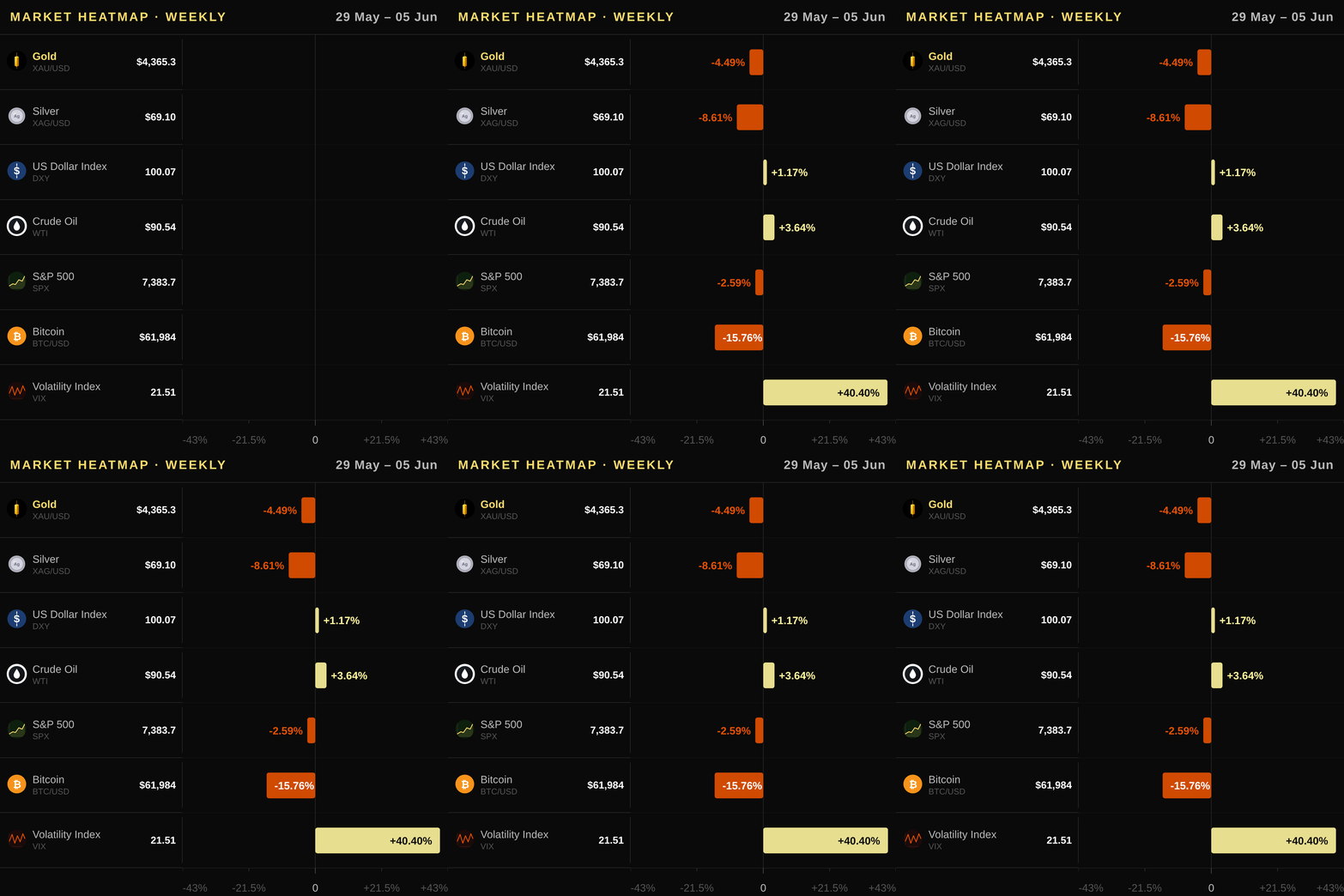
Gold’s correlation with the DXY remains strong; as the dollar index climbs to 100.07 amid rising real rates, gold becomes more expensive for foreign buyers, suppressing global demand. The US 10Y Treasury yield at 4.536% continues to weigh on XAU/USD by increasing the opportunity cost of holding this non-yielding asset. Silver mirrors gold’s weakness with a -8.61% weekly drop, while copper lags slightly despite broader industrial risk-off sentiment, trading near $6.28/lb. The SPX decline reflects systemic caution but does not fully offset safe-haven flows; the VIX spike to 21.51 supports gold’s defensive appeal even as equities soften. Bitcoin’s volatility persists at $61,207, down -8.24% weekly, reinforcing that digital assets remain distinct from traditional havens like XAU/USD. WTI oil strength at $90.54 introduces geopolitical risk premiums, which can indirectly bolster gold during Middle East tensions.
Upcoming Catalysts
- CPI (Consumer Price Index) — 2026-06-10: measures the monthly change in prices paid by US consumers; a hotter-than-expected reading would push real yields higher and weigh on gold, while a soft print could reignite rate-cut expectations and support XAU/USD.
- PPI (Producer Price Index) — 2026-06-11: tracks wholesale inflation at the factory gate; often a leading signal for future CPI trends and Fed policy direction.
- GDP (Gross Domestic Product) — 2026-06-25: Q1 2025 final revision; a weaker growth figure increases recession risk and safe-haven demand for gold, while a strong number reinforces the Fed's higher-for-longer stance.
- NFP (Non-Farm Payrolls) — 2026-07-02: monthly US jobs report; a strong labor market limits the Fed's room to cut rates, pressuring non-yielding assets like gold, whereas a miss could accelerate dovish repricing.
Trading Idea
Given the current downtrend and bearish MACD histogram of -7.97, traders should consider a short position on XAU/USD with an entry zone between $4250 and $4365 USD to capitalize on further downside toward key support levels. A stop loss is placed above the SMA 20 at $4600 USD in case of a sudden bullish reversal driven by unexpected Fed dovishness or sharp dollar weakness. The initial target sits near the recent session low around $4100 USD, offering logical room for profit before testing deeper support zones below that level. US investors can execute this strategy using SPDR Gold Shares (GLD) or iShares Gold Trust (IAU) on US exchanges, trading COMEX gold futures directly, or purchasing physical bullion from reputable dealers like APMEX and the US Mint to hedge against potential market volatility.
Price Outlook and FAQ
Gold is expected to trade between $4260 and $4510 tomorrow as price action consolidates below key resistance while monitoring CPI data on June 10; for this week, a directional bias toward the downside persists near SMA support at $4358, with potential relief rallies capped by overhead moving averages.
Is gold still an effective inflation hedge for US investors given current economic conditions? Yes, despite elevated headline CPI of 3.95%, gold continues to function as a strategic hedge against persistent price pressures and real rate uncertainty; however, its efficacy is currently muted because the 10Y Real Rate (TIPS) stands at 2.11%, which increases the opportunity cost for holding this non-yielding asset compared to bonds offering similar inflation-adjusted returns.
How do Federal Reserve decisions on interest rates and real yields influence gold prices? The Fed's policy trajectory sets the benchmark for nominal rates, but it is specifically the direction of real rates—derived from TIPS—that dictates bullion demand; when real yields fall or stabilize near 2.10%, they lower the opportunity cost of holding non-yielding assets like gold, supporting higher prices, whereas rising spreads between long-term and short-term treasuries often cap upside potential.
What are the primary ways for US investors to acquire physical or exchange-traded exposure? US investors can gain immediate market access via SPDR Gold Shares (GLD) and iShares Gold Trust (IAU) listed on NYSE, while those preferring tangible metal should consider purchasing from reputable dealers such as APMEX, JM Bullion, or the US Mint; alternatively, direct futures participation is available through COMEX contracts for experienced traders seeking leverage.
This article is for informational purposes only and does not constitute investment advice or a financial recommendation. Investing in financial assets involves risk.
Key Takeaways for Traders
-
Current Stance: Gold is currently in a strong downtrend with price action below key moving averages, suggesting traders should wait for confirmation above $4537 before initiating long positions to avoid catching falling knives during this correction phase.
-
Key Technical Level: Traders must watch the 60-day low support at USD 4100.8 as a critical pivot; if price breaks below this level with volume, it signals further downside toward $4358, while holding above it offers a base for potential stabilization near SMA 20.
-
Macro Driver: Monitor the US CPI release on June 10 closely, as any deviation from expectations will directly impact inflation readings and real rates via TIPS yields, which serve as the primary opportunity cost metric for non-yielding gold assets.
-
Flow Signal: Although ETF flows show a net outflow of $2 billion recently indicating short-term institutional selling pressure, COT data reveals speculative longs have increased by 12,717 contracts over five weeks, suggesting underlying bullish sentiment among large hedge funds despite retail and fund manager caution.
-
Risk Consideration: Geopolitical tensions in the Middle East remain a significant catalyst that could trigger safe-haven flows regardless of real rates or dollar strength; investors should consider hedging portfolios with physical gold allocations if volatility spikes above VIX levels near 21.
