Market Bias
Neutral-to-Bearish (Short-Term) | Bullish (Long-Term) Gold is in a corrective phase within a structural uptrend. The price has slipped below both the SMA 20 and SMA 50, while the RSI sits in neutral-bearish territory. Elevated real yields and a firm dollar are the primary headwinds, but robust COT positioning, record ETF inflows, and central bank demand provide a structural floor. The trend resumes only on a confirmed close above $4,649 (SMA 20).
Executive Summary
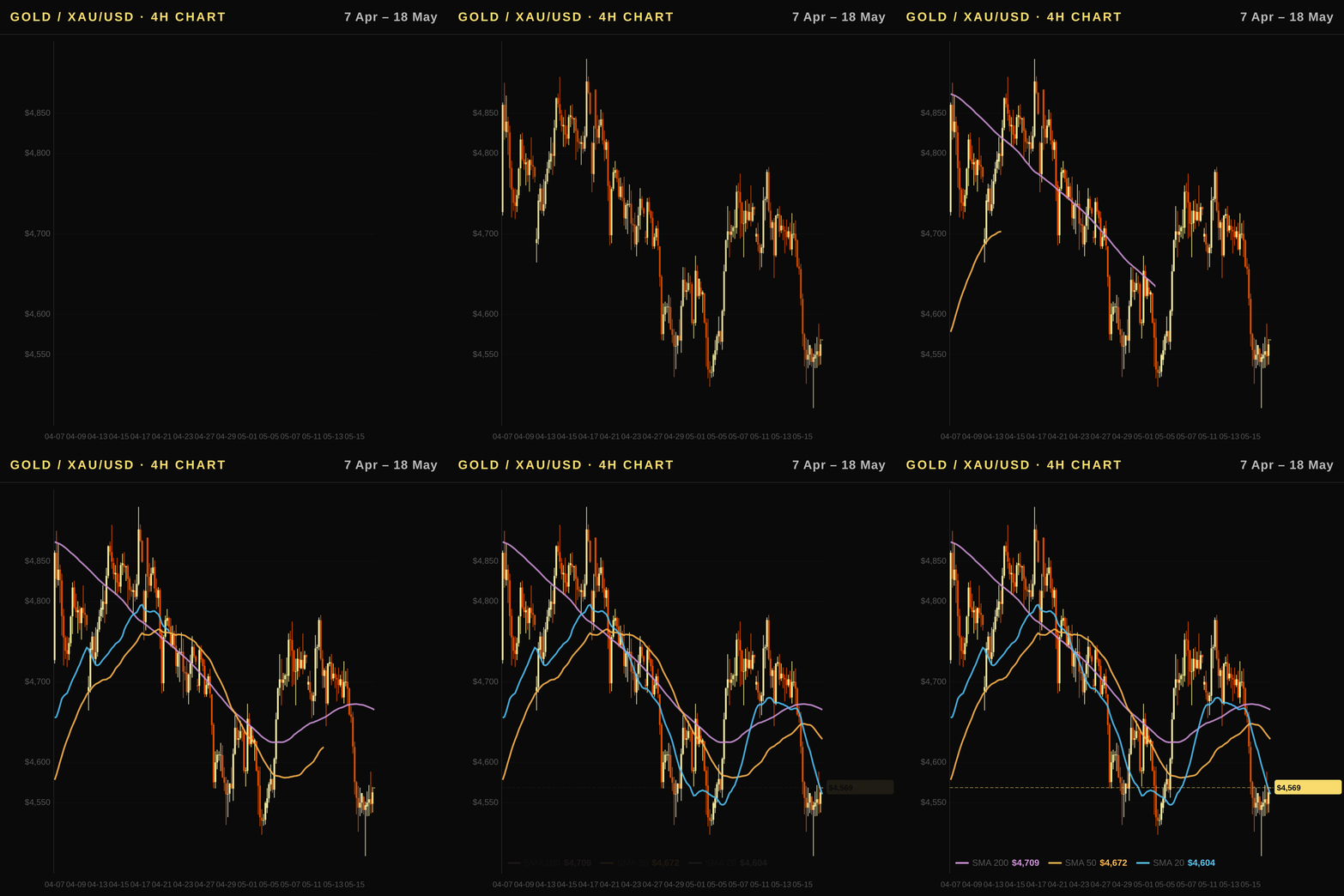
Gold price today stands at $4,565 USD/oz, registering a weekly loss of 3.18% and a monthly decline of 5.95% as the metal trades below its key short-term moving averages. The corrective pressure stems from real 10-year Treasury yields at 2.1% and a strengthening DXY at 98.98, both of which raise the opportunity cost of holding non-yielding gold. Yet the fundamental picture remains constructive: the CFTC COT report shows speculative non-commercial net longs at 171,622 contracts (up 9,096 over five weeks), and ETF holdings absorbed 45.2 tonnes / $6.59 billion in April alone. Central banks globally hold 23,124 tonnes, anchoring long-term demand. The key technical battleground is the Bollinger lower band at $4,513 — a sustained close below this level risks a move toward the SMA 200 at $4,332. Conversely, reclaiming the SMA 20 at $4,649 would signal correction exhaustion and likely reignite institutional buying.
US Outlook: Fed Policy, Real Rates, and Gold's Safe-Haven Premium
The Federal Funds Rate holds at 3.64%, and the 10-year Treasury yield has risen to 4.32%, pushing the real (inflation-adjusted) 10-year TIPS yield to approximately 2.1%. Higher real rates are the single most important headwind for gold price today — as the real return on "risk-free" US debt rises, the relative appeal of a zero-yield asset like gold diminishes. The 10Y–2Y yield spread has widened to 0.5%, signaling that markets no longer expect imminent recession, which further reduces gold's safe-haven urgency in the near term.
However, the Fed is widely expected to begin cutting rates by late 2026 if CPI continues to ease from its current 3.95% level. Each 25 bps cut would lower real yields and weaken the dollar, directly supporting gold. The geopolitical risk premium — driven by the ongoing Middle East conflict — is currently insufficient to override the yield headwind but serves as a floor that prevents a deeper selloff. Sticky inflation also works in gold's favour structurally: if CPI re-accelerates, the Fed's room to cut is constrained, and inflation hedging demand for gold would intensify.
Technical Analysis
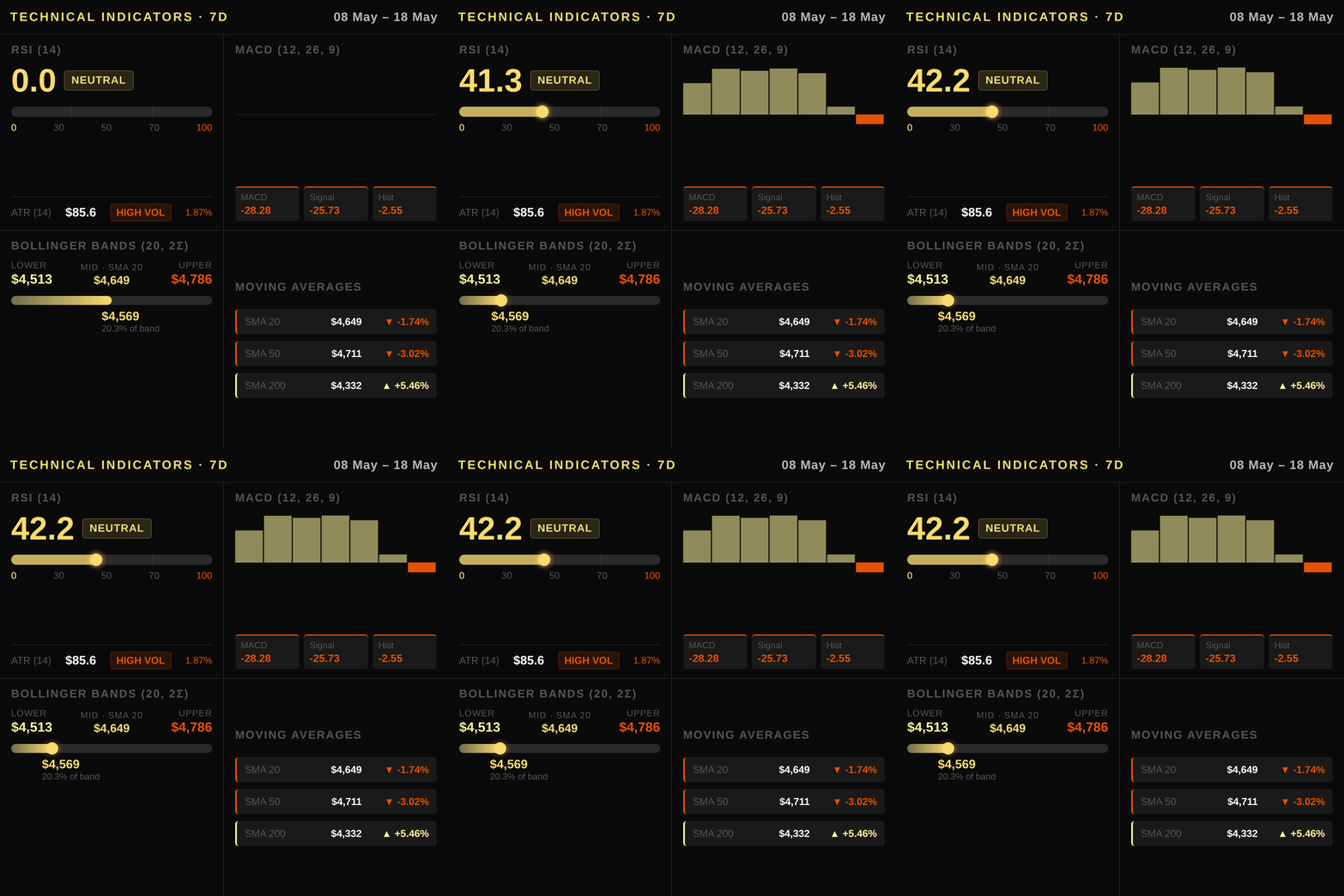
Gold price today is $4,565 USD/oz, trading below its short-term moving averages in a confirmed corrective structure within the long-term uptrend.
- Moving Averages: Bearish short-term alignment — price below SMA 20 ($4,649) and SMA 50 ($4,711), both now acting as resistance. The SMA 200 ($4,332) is the primary structural support; a break below invalidates the long-term bull thesis.
- RSI & MACD: RSI (14) = 41.9 — neutral-to-bearish, approaching but not yet at oversold extremes. MACD = -28.57, below the signal line (-25.79); histogram at -2.78 confirms selling momentum with early signs of deceleration.
- Bollinger Bands & ATR: ATR (14) = $85.6 reflects elevated daily volatility. Bollinger upper band $4,786, lower band $4,513. Price is testing the lower band — a sustained close below it would signal a deeper correction.
- Key Levels: Immediate resistance at SMA 20 ($4,649). Critical support at $4,513 (Bollinger lower) and $4,332 (SMA 200). 60-day range: high $5,405 — low $4,101.
Macroeconomic Factors
US CPI stands at 3.95% annually, remaining above the Fed's 2% target and limiting the pace of potential rate cuts. The 10-year Treasury yield at 4.32% and the 2-year at 3.82% produce a 0.5% 10Y–2Y spread, consistent with a soft-landing scenario rather than a recession — a context historically less bullish for gold than a deep inversion. The US economy grew 2.5% in 2024, demonstrating resilience that allows the Fed to remain patient on cuts.
The DXY index at 98.98 remains firm, directly suppressing dollar-denominated gold prices. Every 1% DXY gain historically corresponds to approximately a 0.8–1.2% gold price decline, all else equal. However, the upcoming June data cycle (CPI, NFP, GDP) will be pivotal: softer-than-expected readings could shift market pricing toward earlier cuts, a catalyst that would rapidly reverse gold's short-term correction.
Market Positioning & Flows
The CFTC Commitments of Traders report dated May 12, 2026 shows speculative non-commercial net longs at 171,622 contracts, up 9,096 contracts over five weeks — a meaningful accumulation that signals institutional conviction in the medium-term upside. Commercial hedgers hold a net short position of -210,258 contracts, the standard producer-side hedge that offsets speculative demand but does not imply directional pessimism.
ETF flows in April were exceptionally strong: 45.2 tonnes of net inflows equivalent to $6.59 billion, bringing total global gold ETF holdings to 4,137.1 tonnes. This institutional accumulation persisted through the price correction, suggesting buyers viewed the dip as an entry opportunity rather than a trend reversal.
Central bank demand remains structurally supportive. The top-10 central bank holders collectively own 23,124 tonnes, and emerging market central banks continue diversifying reserves away from US dollar assets — a secular trend that provides a persistent demand floor independent of short-term price moves.
Correlated Assets
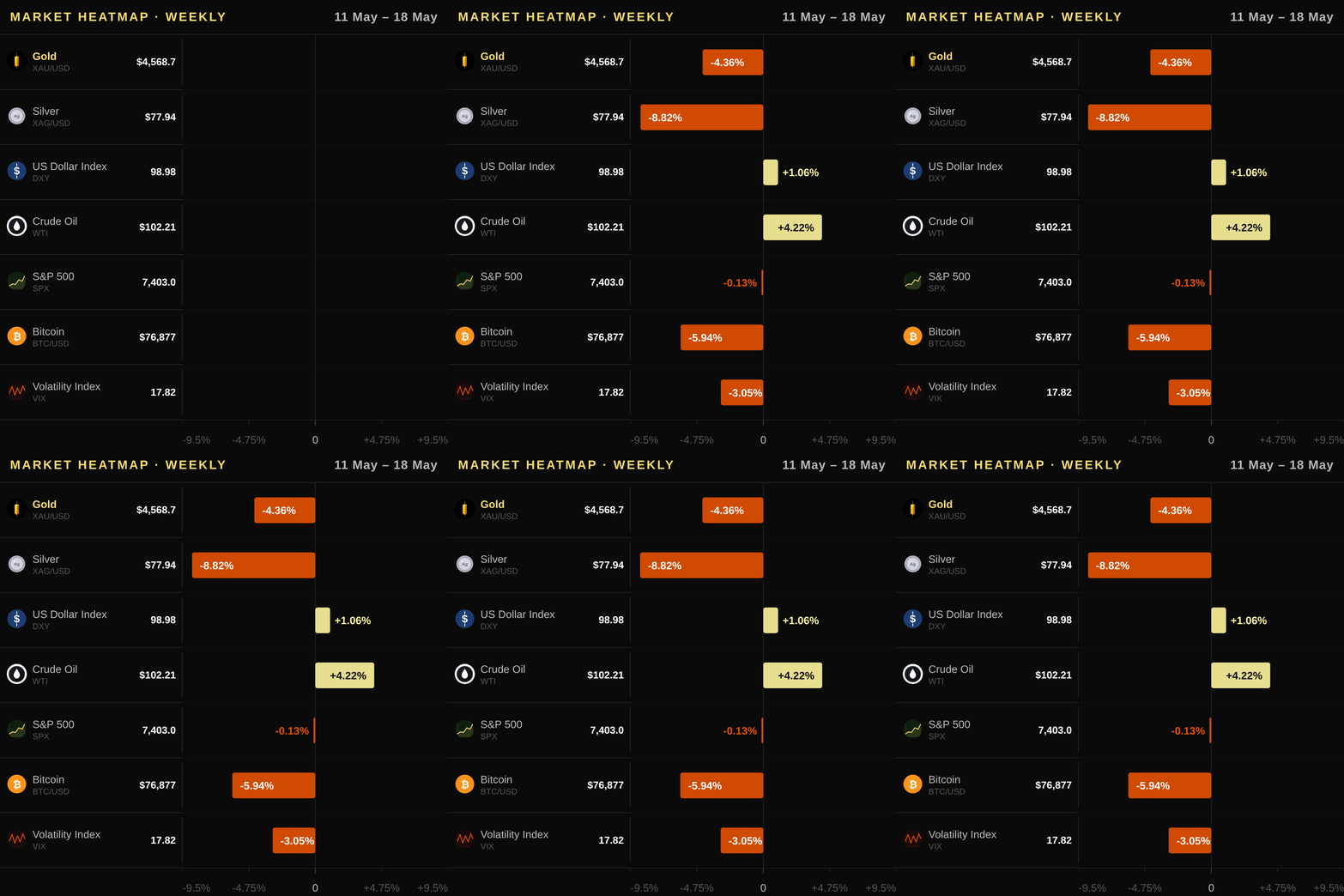
The DXY at 98.98 maintains its inverse correlation with gold — dollar strength is the dominant near-term headwind and its reversal would be the most direct catalyst for gold's recovery.
US 10Y Treasury yield at 4.32% and TIPS real rate at ~2.1% represent the core structural drag on gold. A sustained decline in real yields — triggered by weaker economic data or dovish Fed guidance — is the single most important variable to monitor.
Silver has declined for five consecutive sessions, with the most recent loss of 0.9% reflecting weaker industrial demand sentiment. The gold/silver ratio widening signals that gold is retaining its monetary safe-haven premium while silver's industrial component weighs on it.
WTI crude oil at $78.49/barrel (weekly +5.1%) reflects geopolitical risk premium from the Middle East conflict. Elevated oil prices feed into inflation expectations, which can support gold indirectly by complicating the Fed's rate-cut path.
VIX has risen over 54% in the past month, entering elevated uncertainty territory. Historically, sustained VIX above 25 drives institutional rotation into gold as a portfolio hedge against equity volatility.
Copper at $6.3065/lb (weekly -1.67%, monthly +3.33%) reflects mixed industrial demand signals — a weekly dip despite monthly gains suggests short-term growth uncertainty, which supports the case for defensive assets.
Upcoming Catalysts
- US GDP (Q1 Advance Estimate) — May 28, 2026
- Non-Farm Payrolls (NFP) — June 5, 2026
- Consumer Price Index (CPI) — June 10, 2026
- Producer Price Index (PPI) — June 11, 2026
Trading Idea
A long entry in gold is recommended in the $4,510–$4,540 USD zone, where the Bollinger lower band and short-term support converge for a favorable risk-to-reward setup. Place a stop-loss at $4,460 USD, below the structural support level, to limit downside on a bearish breakdown. The primary target is recovery of the SMA 20 at $4,649, representing approximately 2.3% upside from entry. A dovish signal from the Fed or a hot CPI print could extend the move toward the SMA 50 at $4,711. US investors can execute this strategy via ETFs (GLD, IAU, GLDM) on major brokerages, gold futures on CME/COMEX, or allocated physical gold through authorized dealers.
Price Outlook & FAQ
For tomorrow, gold price today is expected to trade in the $4,490–$4,620 USD range, with the Bollinger lower band at $4,513 as the pivotal support level. The short-term bias is neutral-to-bearish until price reclaims the SMA 20 at $4,649 — that level marks the boundary between correction and trend resumption.
Why are rising real yields bearish for gold price today? Gold produces no yield, so when risk-free real interest rates rise — as they have to ~2.1% on the 10-year TIPS — the opportunity cost of holding gold increases relative to US Treasuries. Investors can earn a positive inflation-adjusted return from bonds, reducing gold's relative appeal. When real yields decline (as expected if the Fed cuts), this relationship reverses and gold typically benefits strongly.
What would it take for gold price today to resume its uptrend? Three conditions would confirm trend resumption: (1) a confirmed daily close above the SMA 20 at $4,649, (2) the MACD histogram turning positive, and (3) a catalyst from the macro data cycle — specifically a softer CPI print or a dovish Fed statement that shifts market expectations toward earlier rate cuts. All three together would likely trigger institutional buying and push the price back toward the SMA 50 at $4,711.
How can US investors access gold as a portfolio hedge today? The most liquid options are ETFs: GLD (SPDR Gold Shares) and IAU (iShares Gold Trust) trade on NYSE and can be held in any standard brokerage or IRA account. For active traders, gold futures on COMEX (GC contracts) offer leveraged exposure with tight spreads. For physical allocation, dealers like APMEX and JM Bullion offer coins and bars with allocated storage. A 5–10% gold allocation is the typical institutional recommendation for inflation hedging and portfolio diversification.
This article is for informational purposes only and does not constitute investment advice or a financial recommendation. Investing in financial assets involves risk.
