Market Bias
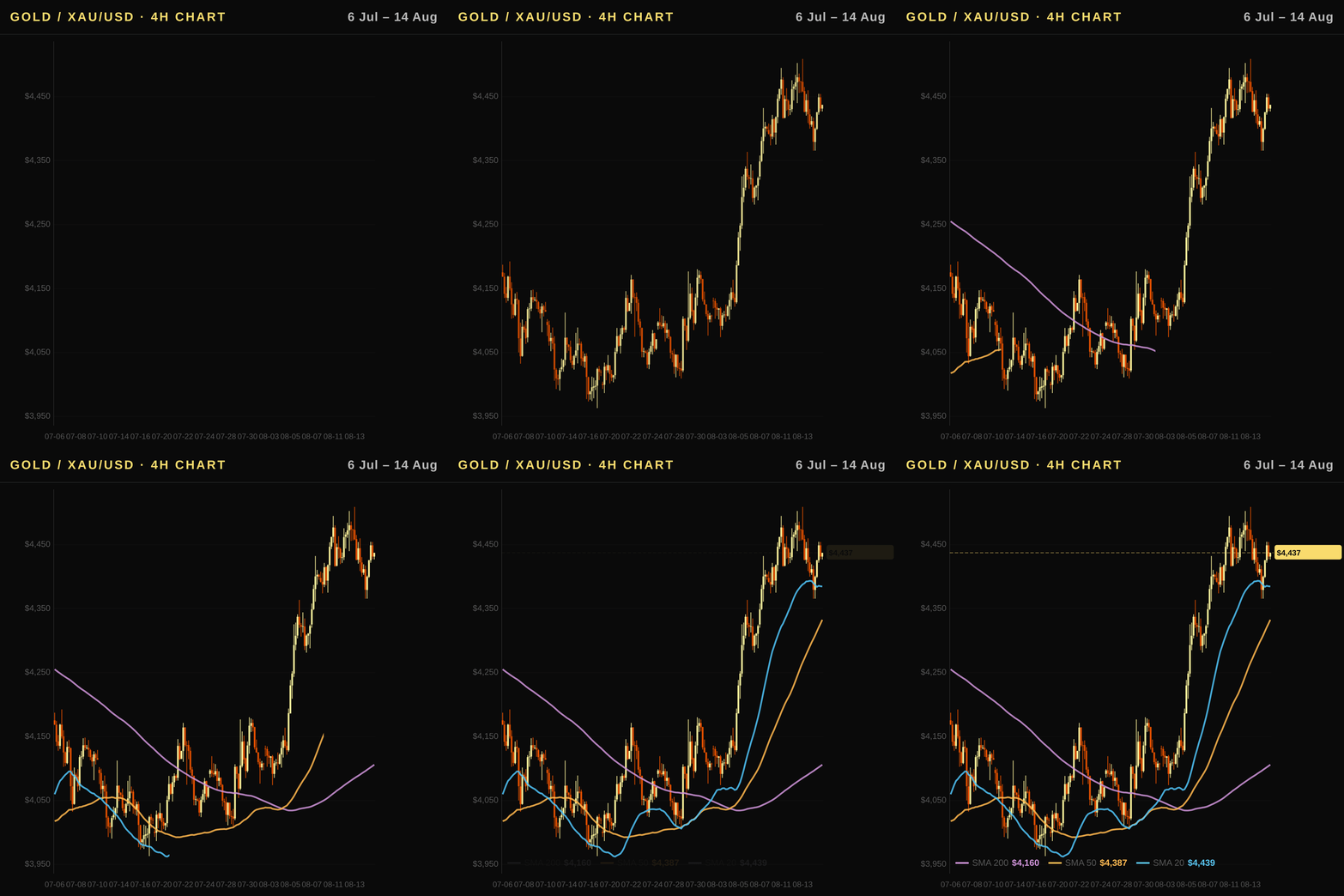
Bullish: A strong weekly rally of 2.23% has carried gold above both its 20-day average at $4177.5 and its 50-day at $4150.1, with only the 200-day at $4494.7 and the 60-day high near $4592 still overhead, even as real rates hold steady above 2%.
Executive Summary
The gold price today in Australia stands at 6,266 AUD/oz while trading at $4437.3 USD, reflecting a strong weekly gain of 2.23% despite lingering downtrend pressure on the broader XAU/USD analysis. A positive monthly flow of approximately $3 billion into global gold ETFs highlights sustained institutional demand for this non-yielding asset amidst rising geopolitical risk. Investors should note that while real rates remain elevated at 2.39%, central bank buying and physical inflows continue to underpin price strength, making the current gold market environment complex but supportive for long-term holders. Australian investors benefit from local currency dynamics where a stable AUD/USD rate of 1.4121 keeps domestic prices competitive against global trends driven by US macro fundamentals.
Australia Outlook: RBA Policy, the Aussie Dollar, and Gold in AUD
Australian investors buy gold priced locally; when the AUD weakens versus the USD, the local bullion price rises as fewer dollars are needed to purchase an ounce. Conversely, a stronger Australian dollar makes imported US-priced gold cheaper for domestic holders, weighing on returns. The current exchange rate of 1.4121 reflects this dynamic: converting today’s spot price from ~$4,437 USD yields approximately $6,266 AUD per ounce.
- Currency Correlation: As a commodity currency, the Aussie dollar tracks WTI oil and global risk sentiment. With WTI futures up 5.4% this week on geopolitical tensions in the Middle East, the AUD has found underlying support that helps cushion local gold prices against USD headwinds.
- RBA Policy Context: The Reserve Bank of Australia maintains its cash rate at 4.35%, creating a favorable differential versus US rates which have stabilised near their peak. This divergence slows capital outflows from the AUD and supports domestic asset valuations, including non-yielding gold bullion.
- Inflation & Growth Reality: Recent data indicates Australian CPI remains low at 2.9% while GDP growth sits modestly at 1.4%. These figures suggest subdued inflationary pressure relative to global peers, allowing the RBA flexibility that often coincides with weaker currency moves beneficial for local gold prices.
Technical Analysis
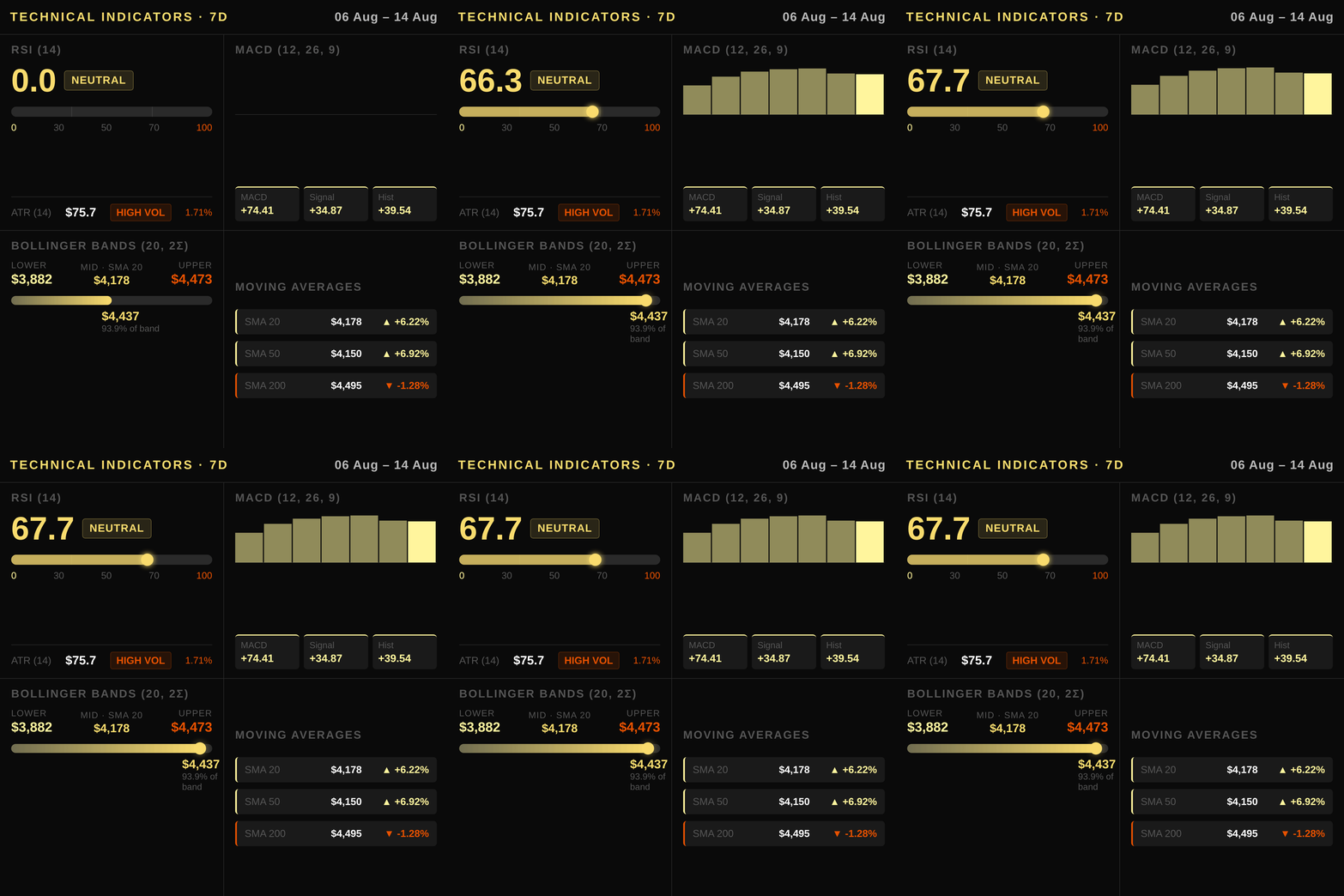
Gold is trading at $4,437.30 against a backdrop of strong upward momentum, positioned above its 20- and 50-day moving averages and below only the 200-day at $4,494.7. The price structure shows bullish strength with the current level holding well above the SMA 20 ($4,177.5) and SMA 50 ($4,150.1) while facing immediate resistance near the Bollinger Band upper band at $4,473.3. Working down from spot, support runs through the SMA 20, then the 60-day low ($3,962.5), then the lower Bollinger Band at $3,881.6.
The Relative Strength Index (RSI) sits at 67.7, indicating robust bullish momentum without yet reaching overbought extremes that would signal an immediate reversal. The MACD histogram is positive at 39.54, confirming strengthening upward pressure even as the broader trend remains corrective relative to longer-term averages. Traders should watch for a break above the 60-day high resistance of $4,591.8 to confirm a decisive shift in the short-to-intermediate trend structure. Conversely, a close back below the SMA 50 at $4,150.1 would invalidate the current bullish bias and open the door toward the 60-day low at $3,962.5.
Volatility remains elevated with an Average True Range (ATR) of 75.7, suggesting that wide swings are normal in this environment and requiring adequate risk management on both long and short positions.
Macroeconomic Factors
The Federal Reserve maintains a policy rate of 3.63%, with the broader economic backdrop defined by rising real rates that weigh heavily on gold as a non-yielding asset. The US 10Y Real Rate (TIPS) sits at 2.39%, reflecting an environment where holding physical bullion entails significant opportunity cost for investors seeking yield-bearing alternatives like government bonds. This dynamic is further reinforced by the nominal US 10Y Treasury Yield of 4.6%, which has climbed to levels that erode gold's relative attractiveness absent a sharp geopolitical escalation or currency debasement narrative.
The US Dollar Index (DXY) is trading at 99.67, showing negligible weekly movement but maintaining an elevated level that acts as persistent overhead resistance for the metal. A stronger dollar makes gold more expensive for foreign buyers, dampening global demand and capping upside momentum even when real yields soften slightly. Conversely, any significant weakening of this benchmark index would likely trigger a rapid repricing in XAU/USD toward its all-time highs near $5,600 per ounce.
Global geopolitical tensions continue to provide a floor for prices despite the headwind from interest rates, as uncertainty drives capital into safe-haven assets regardless of monetary policy stances. However, investors must weigh this premium carefully against the sustained pressure from tight US fiscal and monetary conditions that have kept real yields elevated throughout 2026.
Positioning and Market Flows
The COT report shows non-commercial net long positioning of 217,940 contracts in gold futures, reflecting a speculative bias that is bullish for XAU/USD. This accumulation by large institutional speculators signals sustained demand from hedge funds and managed money ahead of key macro events. In contrast, commercial traders maintain a substantial short position of -252,640 contracts to hedge production risks; this net negative stance acts as a neutral-to-bearish counterweight that offsets some speculative buying pressure in the futures market.
Institutional flows through ETFs have turned positive recently, with monthly inflows totaling approximately $2.97 billion and holdings rising by 23.5 tonnes to reach 4,068 tonnes at year-end July. This net inflow trend indicates growing institutional appetite for physical exposure via paper instruments, supporting the metal’s price despite broader macro uncertainty. Conversely, significant outflows would signal a rotation away from these vehicles toward other assets or direct ownership of bullion.
Central bank demand continues to underpin gold prices as global central banks accumulate reserves to diversify portfolios and hedge against currency volatility in USD-denominated assets. This structural buying interest provides a reliable floor for the metal even when traditional safe-haven flows moderate, ensuring that supply-side constraints from mining production remain relevant alongside institutional positioning trends across futures markets globally today
Correlated Assets
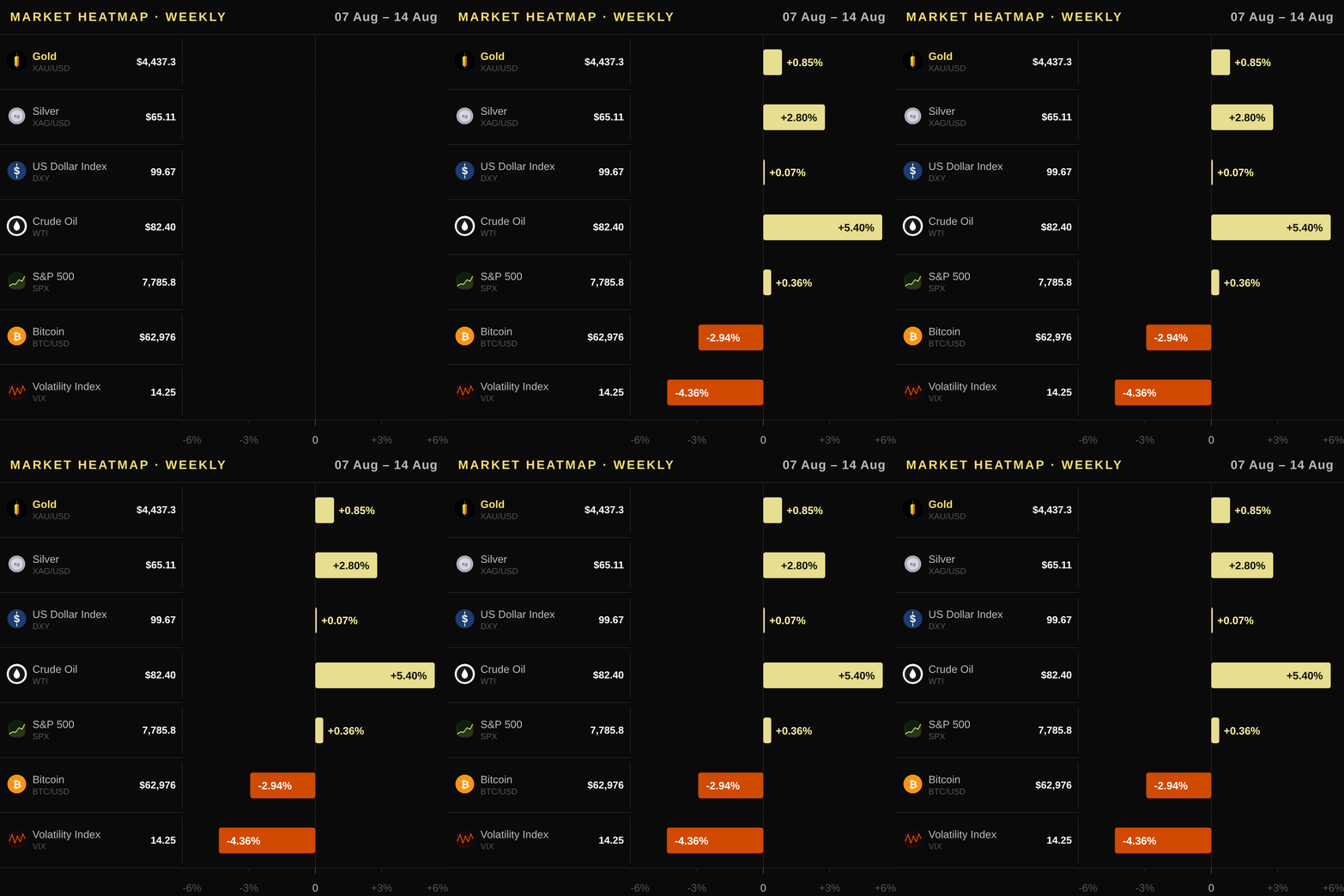
Silver has rallied 2.8% over the past week, matching gold's upward momentum as safe-haven demand surges amid geopolitical uncertainty in the Middle East. Copper futures advanced by 0.65%, while WTI oil climbed 5.4% to $82.4 per barrel; both commodities reinforce a bullish risk-on backdrop that supports XAU/USD despite higher yields. The US Dollar Index (DXY) slipped -1.05% monthly, easing pressure on gold and allowing the non-yielding asset to appreciate against weaker currency environments.
The S&P 500 posted a modest weekly gain of 0.36%, yet equity volatility remains low with the VIX down 4.36%. This risk-on sentiment contrasts with gold’s safe-haven role, highlighting its unique appeal during geopolitical shocks rather than typical market rallies. US Treasury yields rose across the curve, with the 10Y yield increasing to 4.6%, while real rates measured by TIPS eased slightly to 2.39%, leaving mixed signals for non-yielding assets despite recent price gains.
Bitcoin declined -0.96% weekly at $62,944, underscoring gold’s stability as a superior store of value during market stress periods.
Upcoming Catalysts
- US Gross Domestic Product — 2026-08-26: A release of GDP growth data could alter expectations for Fed policy direction and influence gold's safe-haven appeal if revisions suggest slower economic expansion.
- US Non-Farm Payrolls — 2026-09-04: Stronger job numbers would likely push real interest rates higher, increasing the opportunity cost for holding non-yielding assets like gold in AUD terms.
- US Producer Price Index — 2026-09-10: An unexpected rise in wholesale inflation could signal broader price pressures and prompt a more hawkish stance from the Federal Reserve, which would weigh on XAU/USD sentiment.
- US Consumer Price Index — 2026-09-11: As the primary gauge of consumer inflation, CPI data directly impacts real rates via TIPS yields; lower readings support gold by reducing opportunity cost for Australian investors holding AUD-denominated bullion or ETFs like GOLD.AX.
Trading Idea
Given the current bullish bias and price action above the near-term moving averages, we favor a long position on XAU/USD with an entry zone between USD 4,350–4,440 (AUD 6,143–6,270). A stop loss is placed below USD 4,140 (AUD 5,846), just under the SMA 50, to invalidate the setup if that support fails. The primary target for this trade is USD 4,590 (AUD 6,482), the 60-day high, with the SMA 200 at USD 4,494.7 the intermediate level to clear. Australian investors can execute exposure through physical gold via Perth Mint bars or Kangaroo coins from local dealers, or gain leveraged access using ETFs like Global X Physical Gold (GOLD.AX) on the ASX if they prefer listed instruments.
Price Outlook and FAQ
Gold is expected to trade between USD 4,310–4,565 (AUD 6,086–6,446) tomorrow as price action remains anchored below the $4,591 resistance. The one-week directional bias stays cautiously bullish given strong ETF inflows of nearly $3 billion, though traders will watch for a break above USD 4,565 to confirm further upside in AUD terms.
Is gold currently an effective inflation hedge for Australian investors? Yes, particularly as the US CPI remains elevated at 3.54% while real rates measured by TIPS have softened slightly to 2.39%, reducing opportunity costs for holding this non-yielding asset. For local holders in Australia where annual inflation sits near 2.9%, gold’s performance helps preserve purchasing power against persistent dollar-linked price pressures without relying on interest-bearing instruments that may yield less than CPI growth over time.
How do Reserve Bank of Australia and Federal Reserve rate decisions impact AUD-denominated gold prices? The RBA policy rate stands at 4.35%, some 72 basis points above the Fed Funds Rate of 3.63%, which means shifts in US real rates or dollar strength directly influence exchange rates that govern local pricing when the AUD/USD pair moves by even small margins. A weaker Australian dollar against a strengthening USD will lift gold’s price locally regardless of its global trend, while tighter RBA policy without corresponding Fed cuts would keep pressure on both currencies and limit upside for domestic bullion holders until inflation targets stabilize again.
How can investors in Australia gain exposure to physical or digital gold assets? Australian residents should consider the Global X Physical Gold ETF (GOLD.AX) or Perth Mint Gold ETF (PMGOLD.AX), which track underlying metal holdings efficiently on the ASX, allowing diversified entry into bullion without storage costs. Alternatively, those seeking direct ownership may purchase Perth Mint bars or Kangaroo coins through licensed dealers like ABC Bullion for tangible secure storage at home or in approved vaults with insurance coverage included by local brokerage firms and professional custodians alike.
This article is for informational purposes only and does not constitute investment advice or a financial recommendation. Investing in financial assets involves risk.
Key Takeaways for Traders
- Current Stance: The market is Bullish as gold price today analysis confirms a strong recovery above key moving averages despite recent volatility; traders should consider entering long positions near current levels to capitalize on positive momentum and institutional inflows, provided entry zones remain within the ±3% band around spot, roughly $4,304–$4,570.
- Key Technical Level: Monitor the 60-day resistance at $4,591.8 (AUD 6,483) as the primary pivot this week; a decisive break above this level would likely trigger further gains toward the all-time high near $5,586 while holding support from the SMA 20 at $4,177.5 should prices retrace.
- Macro Driver: Watch the US Fed Funds Rate and real yields (TIPS at 2.39%) to gauge opportunity cost for gold; a stabilizing dollar or any shift toward lower interest rates will provide fundamental support for higher XAU/USD prices in coming sessions, reinforcing bullish sentiment over inflation concerns currently running at 3.54%.
- Flow Signal: Strong ETF inflows of $2.97 billion alongside non-commercial net longs of 217,940 contracts indicate sustained institutional buying pressure that outweighs short-term fluctuations; this positioning signals robust demand from global investors seeking safe-haven assets amid geopolitical uncertainty and central bank accumulation trends.
- Risk Consideration: Be cautious if US CPI data on September 11 or NFP releases on September 4 show unexpectedly high numbers that could spike real rates, potentially causing a temporary pullback toward the lower Bollinger Band at $3,881.6 before resuming an upward trend aligned with global risk-off dynamics and oil price strength from WTI rising +5.4%.