Market Bias
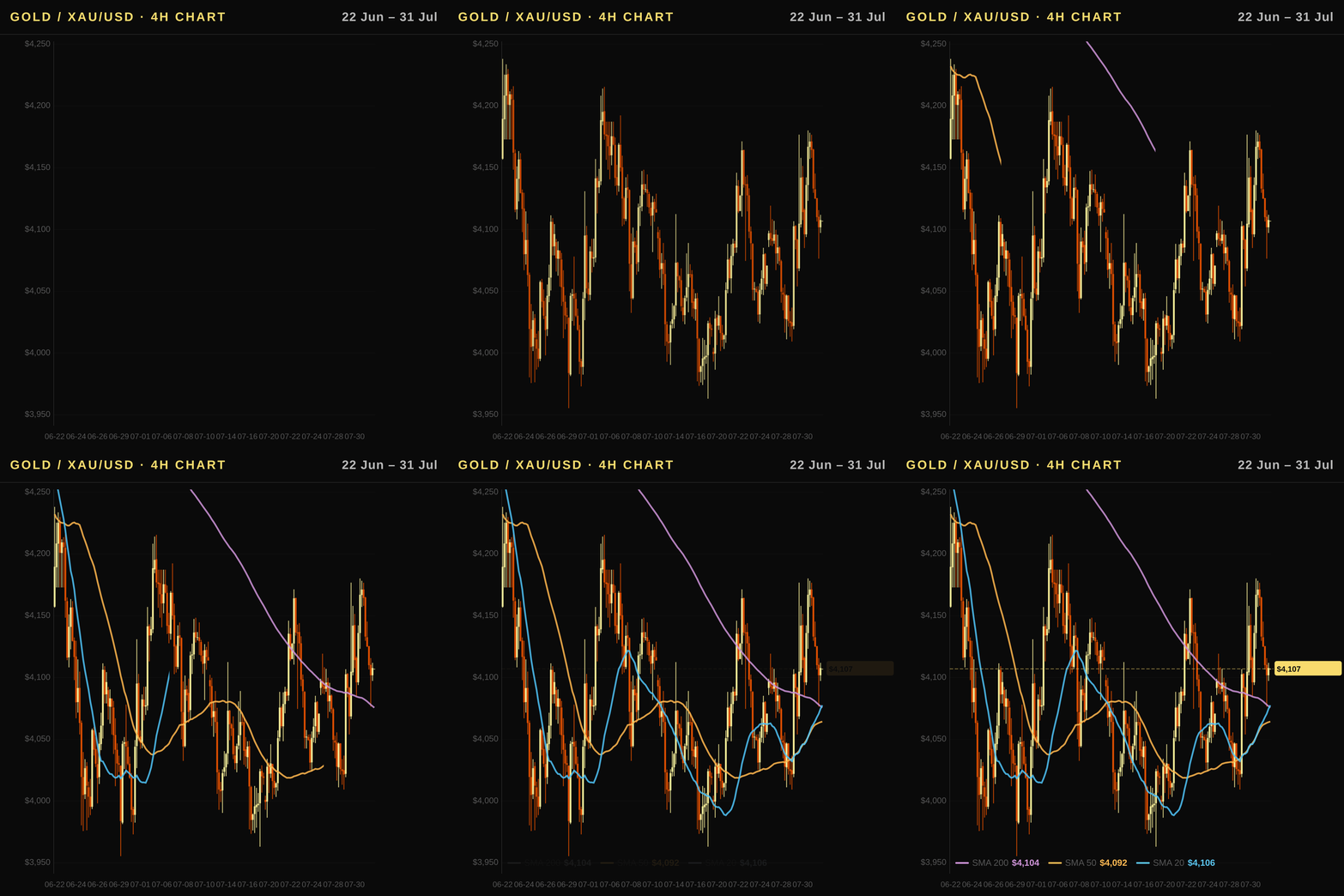
Bearish: Current gold price of $4107 is trading below both the 50-day ($4187.9) and 200-day ($4483.7) moving averages with a negative MACD line, indicating sustained downward momentum despite recent weekly gains. The downtrend remains intact as long as spot fails to reclaim resistance above $4169 and the RSI stays near neutral at 50.2 without breaching bullish territory.
Executive Summary
Gold price today in Australia (AUD) stands at 5,748 AUD/oz, held back by a firmer Aussie dollar and pressured by elevated real yields and significant ETF outflows of $-9.19 billion this month. While the asset remains up 21.5% year-to-date as a non-yielding hedge against geopolitical risks in Australia, technical indicators suggest caution given price action below the 50-day moving average at 4,187.9 USD. The XAU/USD market currently reflects a struggle between safe-haven demand and higher opportunity costs driven by US Treasury real rates of 2.41%, making gold analysis essential for balancing portfolio exposure against currency dynamics.
Australia Outlook: RBA Policy, the Aussie Dollar, and Gold in AUD
Australian investors buying gold priced locally benefit when the currency weakens against the US dollar; currently, with USD/AUD at 1.4220 falling over the last month by -1.40%, the Aussie has strengthened and the local price of bullion near 5,748 AUD has been compressed accordingly. Conversely, a weakening Aussie would lift gold’s value in domestic terms even if global USD prices stall.
- The Reserve Bank of Australia (RBA) maintains its policy rate at 4.35% as it independently targets inflation while monitoring the exchange-rate impact on commodity flows.
- RBA monetary conditions generally remain neutral relative to US Fed policy, which currently sits near 3.63%, though a widening differential would further support USD strength and lower local gold prices.
- Australia’s annual CPI stands at 2.9% while GDP growth for the year was modestly positive at 1.4%, providing a stable macro backdrop that avoids sharp currency shocks.
The Aussie dollar acts as a classic commodity-linked asset, moving in tandem with risk sentiment and energy markets; this week WTI crude slipped by -5.2%, exerting downward pressure on AUD value but leaving the gold price resilient due to global demand fundamentals.
Technical Analysis
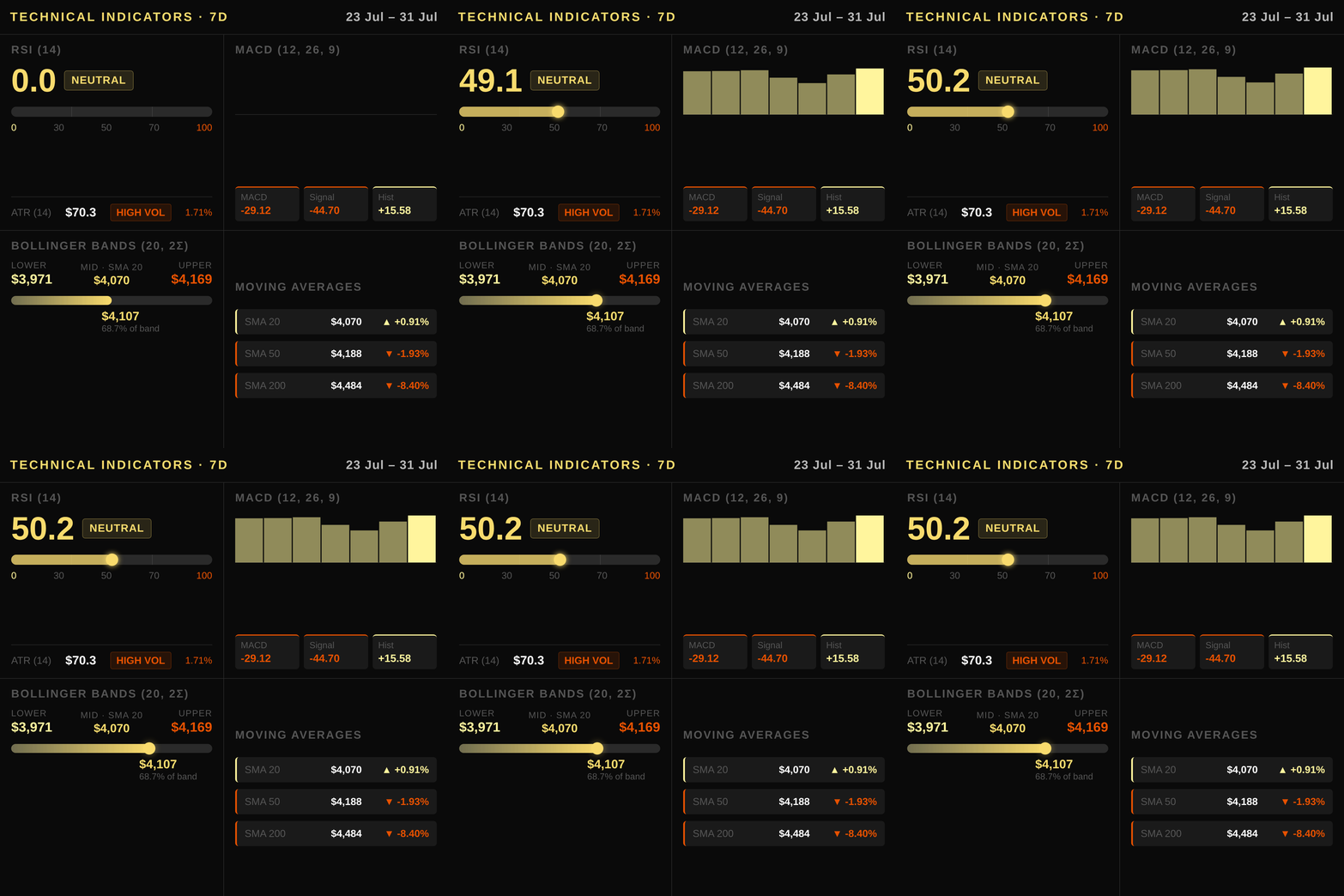
Current price action in USD confirms a strong downtrend as spot gold trades below both the 50-day ($4,187.9) and 200-day ($4,483.7) moving averages while holding just above the SMA 20 at $4,070.1. This structural weakness is reinforced by technical indicators showing an RSI of 50.2, which sits marginally above the neutral threshold rather than in oversold territory that might suggest a reversal. Momentum remains capped as the MACD line stands at -29.12 above its signal level of -44.69 — a bullish crossover inside a downtrend, which is what generates the histogram reading of +15.58 and indicates easing downside pressure within the broader bearish context. Volatility has tightened relative to recent extremes with an ATR value of 70.3, while price oscillates between Bollinger Bands defined by an upper band at $4,169.0 and a lower support zone near $3,971.1. Key resistance lies ahead at the 60-day high of $4,765.2, whereas immediate support is anchored around the 60-day low at $3,962.5. For Australian investors watching these levels, converting to local currency using today's rate reveals a critical AUD support near $5,635 and resistance approaching $6,776.
Macroeconomic Factors
The current trajectory of Federal Reserve policy is anchored by a Fed Funds Rate at 3.63%, with real rates reflected directly in the 10Y Real Rate (TIPS) figure of 2.41%. This positive spread between nominal yields and inflation creates an opportunity cost for holding gold, as investors must weigh the return on non-yielding assets against rising real interest returns. The US Dollar Index remains near 99.8 but has weakened over the past week by -1.65% and month-to-month by -1.57%, a dynamic that supports global demand for XAU/USD despite higher yields. Geopolitical tensions continue to provide a risk-off premium, allowing gold to trade resiliently even when economic data suggests stability in US equities like the SPX. The broad market rally seen recently with the S&P 500 rising slightly does not necessarily negate safe-haven flows during periods of financial stress or external shocks.
US CPI inflation sits at 3.73% annually, which remains sticky enough to keep real rates elevated and limit aggressive easing by central banks. This macro backdrop reinforces the bearish pressure on gold when viewed through a pure interest rate lens, though geopolitical uncertainty acts as an offsetting tailwind. The yield curve, characterized by a positive spread between US10Y at 4.745% and 2Y Treasury Yield at 4.11%, indicates a normal upward slope rather than inversion signals that typically precede recession fears or deep gold rallies. Copper prices have rallied significantly this month (+5.74%), suggesting industrial demand remains robust, yet the broader commodity cycle driven by WTI oil volatility continues to influence the AUD dollar and local sentiment for Australian investors holding XAU/USD positions.
Positioning and Market Flows
The CFTC Commitment of Traders report reveals a net non-commercial long position standing at 182,070 contracts, indicating bullish speculative sentiment from institutional players despite recent positioning adjustments over the past week. That net long shrank by 11,949 contracts week-over-week, a sign that speculative conviction is thinning even as the overall stance stays long.
Conversely, ETF flows tell a different story for immediate physical demand. Total holdings declined by 76.5 tonnes in June with net outflows of approximately $9.19 billion USD, signaling that investors are selling their shares to reduce exposure rather than rotating into the metal. Such sustained institutional distribution acts as a significant bearish drag on short-term price momentum.
Central bank demand continues to provide essential structural support for gold prices over the long term. While commercial hedgers maintain net short positions of -212,309 contracts typical of producers managing production risk, sovereign purchases have insulated the asset from broader market volatility during periods of geopolitical uncertainty and currency devaluation risks globally.
Correlated Assets
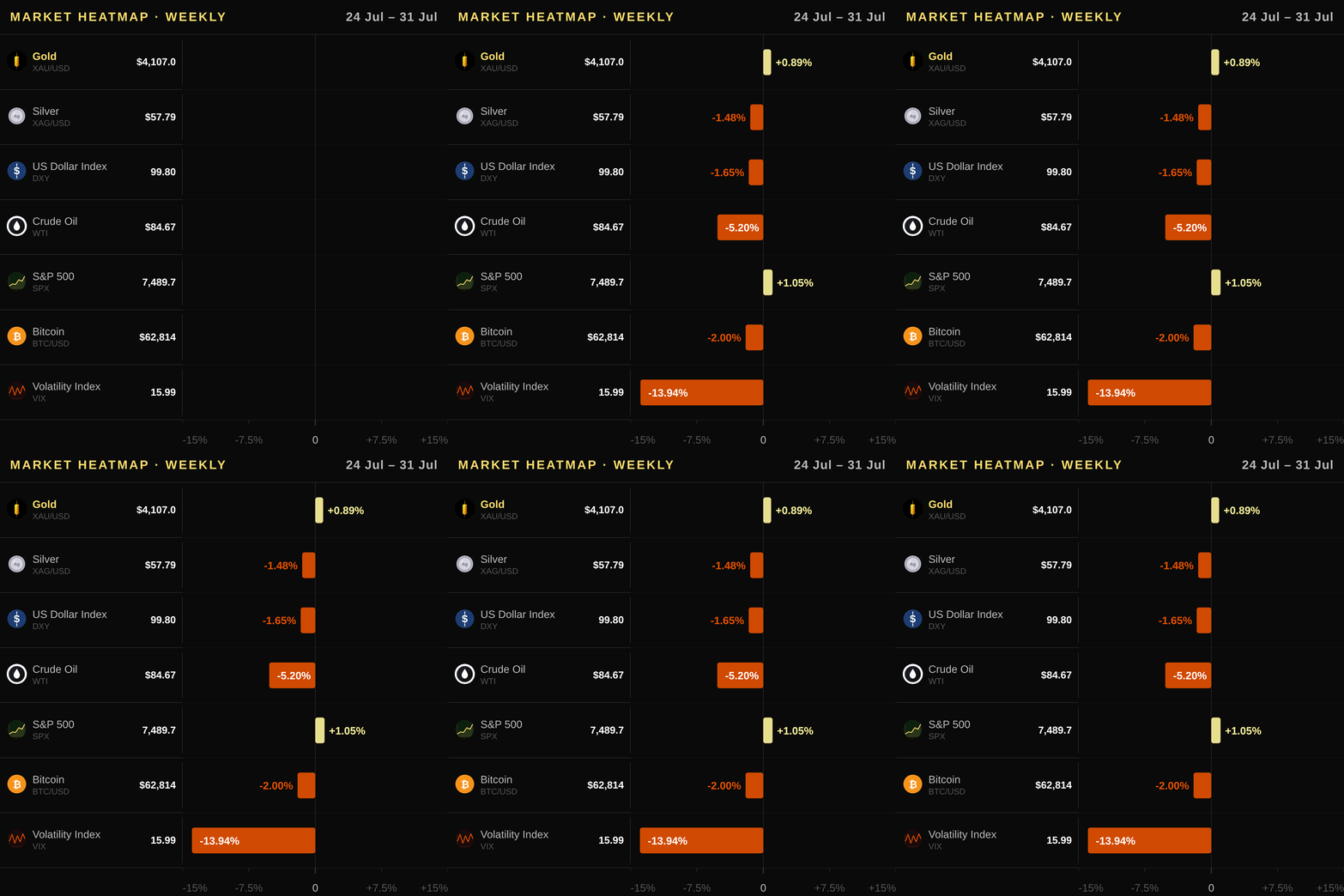
Gold’s relationship with key assets reinforces its current bearish bias, as seen in the USD-based XAU/USD analysis. The US Dollar Index (DXY) at 99.8 has declined -1.65% this week and -1.57% over the month; a weaker dollar typically supports gold globally, yet price action remains subdued despite the inverse correlation. Real yields remain elevated with the 10Y Real Rate (TIPS) at 2.41%, increasing the opportunity cost for holding non-yielding gold. Copper futures trade at USD 6.4655/lb and are rising +2.3% weekly, reflecting robust industrial demand that underscores risk appetite rather than safe-haven flows. WTI oil has dropped -5.2% this week but gained +23.26% monthly; energy volatility supports AUD-linked commodity dynamics while complicating inflation narratives for central banks. Silver lags gold with a weaker performance at USD 57.786/oz, falling -1.48% weekly and -4.71% monthly, highlighting metal-specific supply constraints over broad macro drivers. The S&P 500 (SPX) sits at 7,489.72 with a modest +1.05% weekly gain, suggesting equities offer yield alternatives that compete against gold’s non-income status. Bitcoin has slipped -1.25% this week to USD 63,072; while digital assets often move independently of traditional markets, they do not serve as substitutes for physical precious metals in institutional portfolios. The VIX fear gauge declined -13.94% weekly amid short-term calm, yet geopolitical tensions keep safe-haven premiums relevant if risk aversion resurfaces quickly.
Upcoming Catalysts
- US Non-Farm Payrolls — 2026-08-07: A stronger-than-expected jobs report could prompt a hawkish Fed pivot, tightening financial conditions and exerting downward pressure on gold prices in the short term.
- US Consumer Price Index — 2026-08-12: Rising inflation data would reinforce expectations for sustained high interest rates via TIPS real yields, which increases the opportunity cost of holding non-yielding assets like XAU/USD and supports a bearish outlook.
- US Producer Price Index — 2026-08-13: Escalating input costs may further elevate inflation expectations ahead of core CPI releases, potentially keeping real rates elevated and capping upside for the gold market despite geopolitical safe-haven flows.
- US Gross Domestic Product — 2026-08-26: A surprise contraction in GDP growth could trigger a risk-off rally driven by recession fears independent of rate expectations, though sustained weak data would likely force aggressive Fed easing that ultimately benefits real rates and the bullion market.
Trading Idea
A short position is recommended as gold remains below its 50- and 200-day moving averages, with entry targeting USD 4130–4180 (AUD 5,873–5,944). Stop loss should be placed above the SMA 50 at USD 4190 (AUD 5,958) to protect against a potential bounce through overhead resistance. The target is set at USD 3965 (AUD 5,648), which aligns with the 60-day low and represents a logical downside extension in this strong downtrend. Australian investors can execute this strategy by selling shares of the Global X Physical Gold ETF (GOLD.AX) or Perth Mint Gold ETF (PMGOLD.AX) on the ASX, or by holding physical gold via Perth Mint bars and Kangaroo coins to offset short exposure if required for portfolio balance.
Price Outlook and FAQ
Gold is expected to trade between $3985 and $4230 USD tomorrow (approx. $5,666–$6,015 AUD), maintaining a neutral-to-bearish one-week bias as price action remains trapped below the 50-day moving average of $4187.9.
Is gold still an effective inflation hedge for Australian investors given current US CPI and real TIPS rates? While high nominal yields can weigh on prices, gold retains its status as a non-yielding asset that protects purchasing power against persistent global inflation risks like the 3.73% annualized US consumer price index rise. The real rate environment remains supportive if the Federal Reserve slows hikes while actual CPI growth stays anchored near central bank targets.
How do RBA and Fed interest rate decisions impact gold prices in AUD specifically? Australian investors must monitor both policies as a stronger dollar driven by divergent rates typically depresses local gold prices, whereas a weaker Aussie dollar boosts the AUD price even if global USD ounces stagnate. The current 10Y Real Rate (TIPS) of 2.41%, alongside the RBA's 4.35% cash rate against the Fed's 3.63%, defines the opportunity cost floor that limits upside momentum for this non-income-generating asset.
What are the best ways for Australian investors to buy gold today? You can gain instant exposure via the Global X Physical Gold ETF (GOLD.AX) or Perth Mint Gold ETF (PMGOLD.AX) listed on the ASX, which track physical holdings efficiently without storage fees. Alternatively, you may purchase certified assets directly from local bullion dealers through Perth Mint gold bars and Australian Kangaroo coins for those preferring tangible reserves in a safe-deposit box.
This article is for informational purposes only and does not constitute investment advice or a financial recommendation. Investing in financial assets involves risk.
Key Takeaways for Traders
- Market Stance: The market remains under bearish pressure as XAU/USD trades below its 50- and 200-day moving averages, requiring traders to wait for a confirmed break above the SMA 50 at $4,187.9 before entering long positions on this side of the range.
- Technical Level: Immediate focus should be placed at the 60-day low support near USD 3962.5 / AUD 5635, which acts as a critical floor for current selling momentum to reverse effectively.
- Macro Driver: Traders must monitor the 10Y Real Rate (TIPS) at 2.41% closely, as rising yields increase the opportunity cost of holding non-yielding gold and sustain headwinds against price appreciation.
- Flow Signal: ETF net outflows totaling $-9,186 million indicate sustained institutional selling pressure that contradicts any bullish sentiment from speculative futures positioning in COT reports.
- Risk Consideration: A sharp rally in the US Dollar Index (DXY) from its current 99.8 would pressure gold in USD terms, though a correspondingly weaker Aussie dollar would partly cushion the AUD price for local holders.