Market Bias: Neutral-to-Bearish Short Term / Bullish Macro Gold is in a technical consolidation phase below the SMA 50, weighed down by significant ETF outflows, but supported by a resilient uptrend and a weakening dollar.
Executive Summary
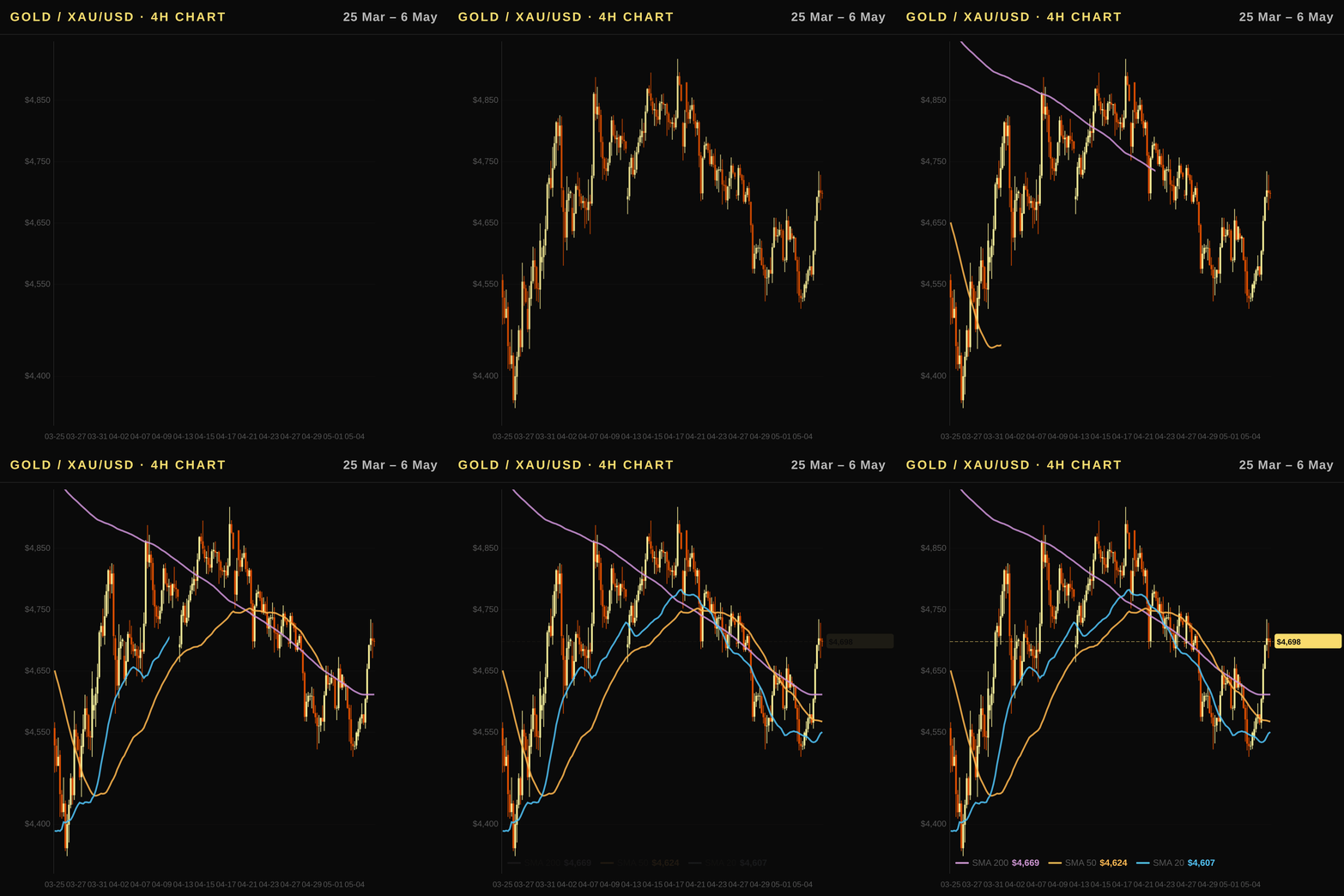
XAU/USD is currently trading at $4698.0, attempting to reclaim the $4697.4 SMA 20 after a volatile week that saw a 3.36% gain, though the broader monthly trend remains negative at -1.08%. While speculative positioning remains bullish according to the latest COT report, institutional capital is exiting the market via $11.74 billion in monthly ETF outflows, creating a friction between retail sentiment and institutional reality. The metal faces immediate pressure from the SMA 50 at $4789.7, a critical barrier that must be breached to confirm continuation of the massive 42.51% annual rally.
Technical Analysis
Current Price Action and Trend Gold is exhibiting a classic "bull flag" correction pattern, pulling back from the $5405.0 resistance zone. The price action is hovering right at the SMA 20 ($4697.4), indicating a tight range-bound session. Despite the weekly uptrend, the daily chart shows signs of exhaustion, with the price unable to sustain momentum above the moving average confluence.
Key Moving Averages The SMA 20 sits at $4697.4, acting as immediate dynamic support. However, the SMA 50 at $4789.7 looms as the primary hurdle; a daily close below this level would invalidate the immediate short-term bullish structure. The SMA 200 at $4279.0 remains a powerful long-term floor, currently $418.7 away, suggesting the major trend remains intact despite the pullback.
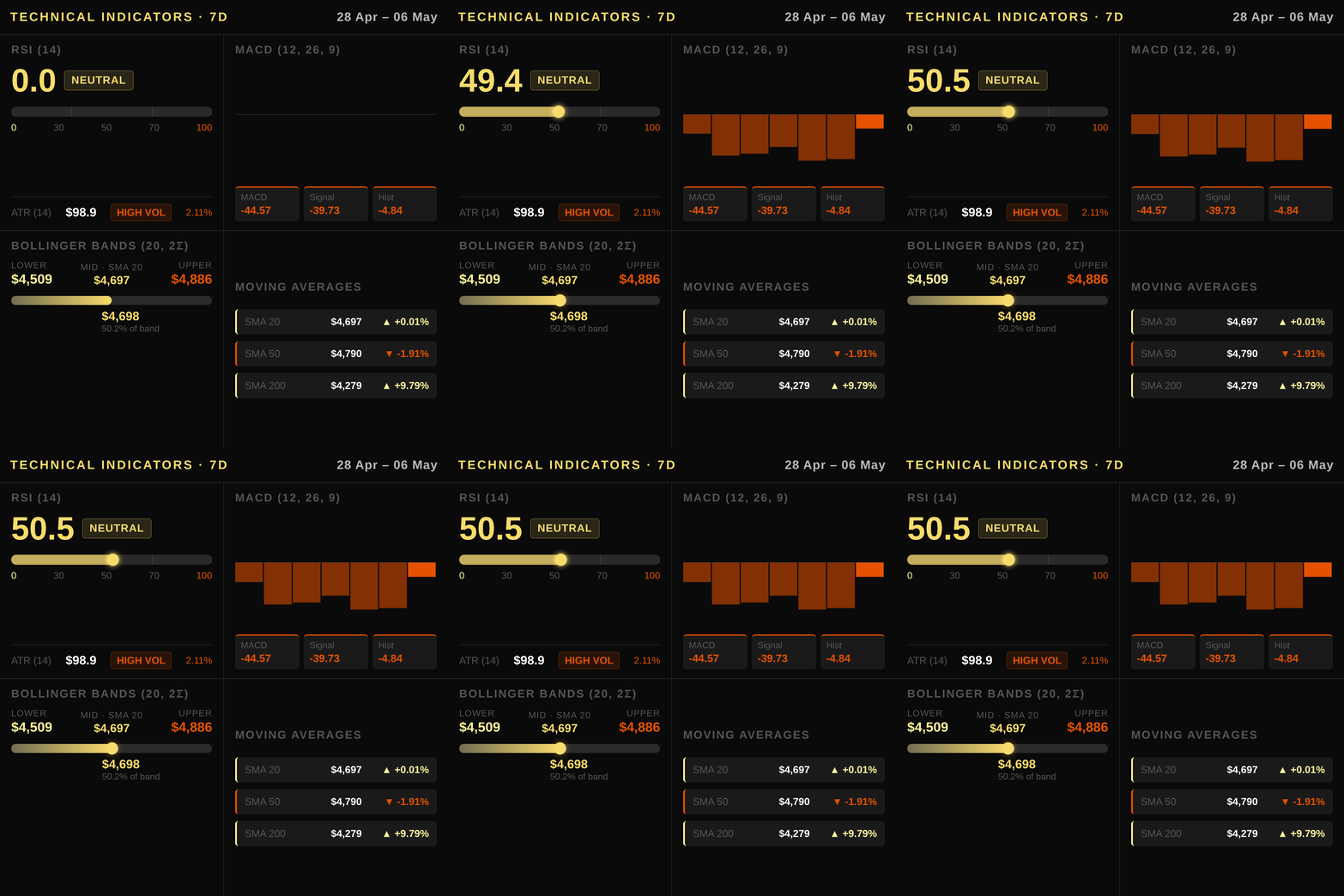
Oscillators The RSI (14) is reading 50.5, sitting exactly at the neutral midpoint. This suggests the market is undecided, lacking the momentum to push decisively higher or lower without an external catalyst. The MACD is showing bearish divergence with the MACD line at -44.57 crossing below the Signal line at -39.73, and a negative histogram of -4.84 indicating downward pressure is currently dominating the oscillator momentum.
Volatility and Bands Gold is trading within a tight Bollinger Band channel. The price is essentially on the middle band ($4697.4), with the Upper Band at $4886.3 and Lower Band at $4508.5. The ATR stands at 98.9, indicating moderate volatility where a single day's move of $100 is normal. The price is not touching the bands, suggesting a pause in the volatile expansion seen during the year-to-date rally.
Support and Resistance * Immediate Resistance: $4789.7 (SMA 50) and $4886.3 (Bollinger Upper). * Immediate Support: $4508.5 (Bollinger Lower) and $4100.8 (60-day low). * Major Resistance: $5405.0 (60-day high).
Macro & Fundamental Drivers
Fed Policy and Real Rates The Federal Funds Rate has stabilized at 3.64%, a significant drop from 4.33% a year ago, yet the 10Y Treasury Yield has ticked up slightly to 4.32%. Crucially, the 10Y Real Rate (TIPS) sits at 1.95%, up 0.04% from the previous reading. Rising real rates generally act as a headwind for non-yielding assets like gold, capping the rally despite the Fed's dovish trajectory.
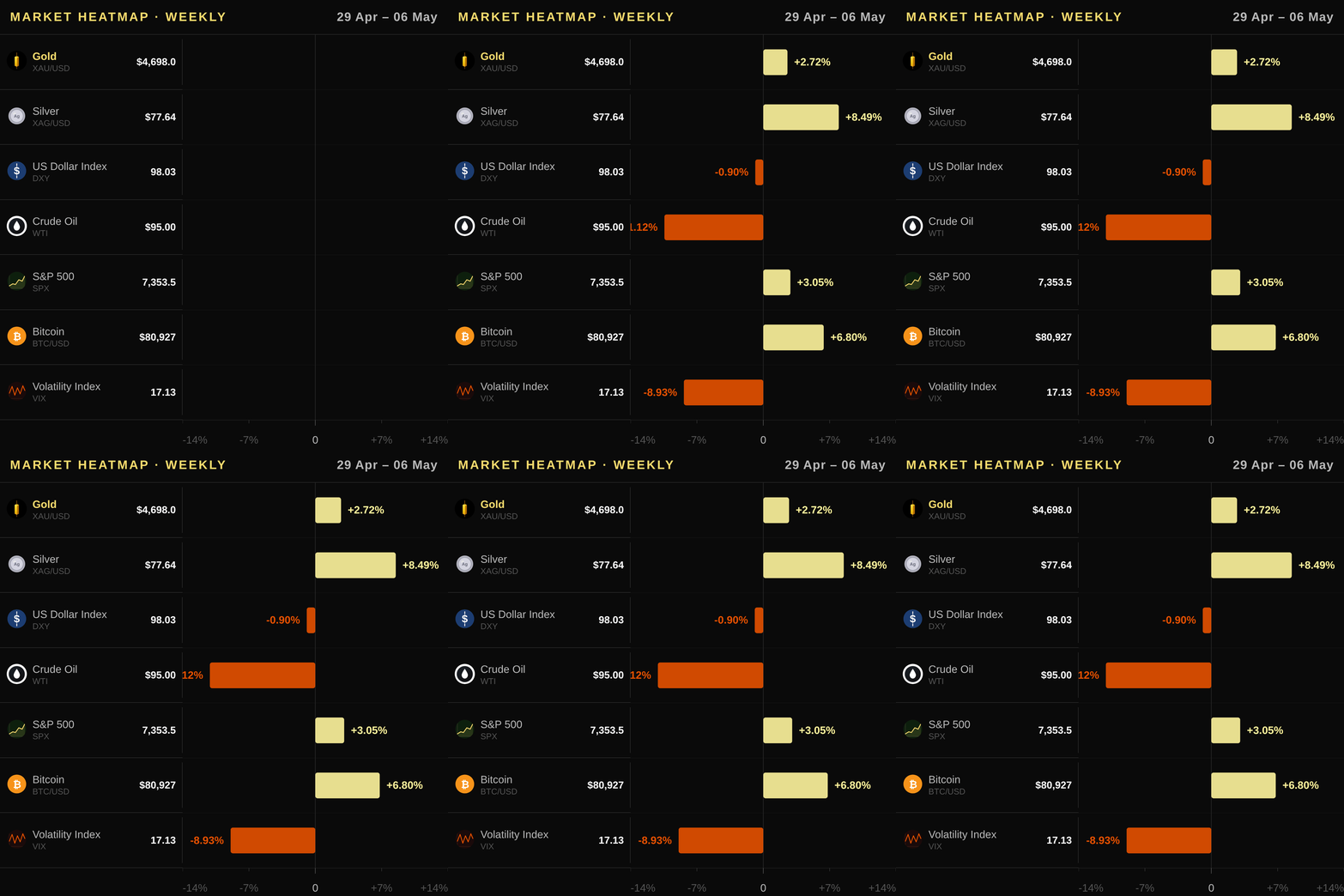
USD and Yield Correlations The DXY has weakened to 98.034, dropping 0.9% weekly and 1.61% monthly. A weaker dollar typically supports gold, which is currently reflected in the price action. However, the US10Y yield increase creates a mixed signal, as higher yields reduce the opportunity cost of holding dollars. The 10Y-2Y Spread remains flat at 0.5%, suggesting the curve is not in a steepening phase that would aggressively drive yields higher.
Inflation Backdrop Inflation remains sticky at 3.32% YoY. While this is down from peak levels, it prevents the Fed from cutting rates aggressively. The persistence of inflation above the 2% target keeps the "higher for longer" narrative alive, which is a structural drag on gold prices.
Geopolitical Risk Recent headlines regarding the Iran war and Middle East violence have added a risk premium. While gold historically acts as a haven, the market has shown resilience to these headlines without a sustained spike, suggesting that the market is pricing in the conflict as a "given" rather than a new driver of inflation or instability.
Institutional Flows and Sentiment
ETF Flows The divergence between price and flows is stark. While the spot price is up, $11.74 billion in ETF outflows this month indicates that large institutions are taking profits or reallocating capital to higher-yielding assets like bonds or equities. This lack of physical demand from the largest players is the primary reason gold cannot break above $4789.7.
COT Positioning Contrary to the ETF outflows, the COT report shows long positions are dominant. However, the net long position is down slightly, suggesting that speculative longs are trimming their exposure. The short interest is low at 1.56%, meaning there is little "short covering" fuel left to drive a parabolic move.
Retail Sentiment Retail sentiment is cautiously optimistic, with the Investor Sentiment Index at 55.2%, slightly above neutral. This aligns with the technical view of a market waiting for a catalyst (such as a clearer path for rate cuts) to re-enter.
Strategic Outlook
Short-Term (1-4 Weeks) Gold is expected to remain range-bound between $4508.5 and $4789.7. The immediate bias is neutral to slightly bearish until the price can close above the SMA 50. Any break above $4789.7 would target the $4886.3 band. A break below $4508.5 could see a test of the $4100.8 support.
Medium-Term (1-3 Months) The medium-term outlook remains bullish, supported by the expectation of further Fed rate cuts and potential geopolitical escalation. However, the path will likely be choppy, characterized by "saws" where the price rallies on bad news and falls on good economic data (higher real rates).
Long-Term (6-12 Months) Fundamentally, the case for gold remains strong if inflation proves persistent and the Fed enters a cutting cycle. The 42.51% gain year-to-date suggests the market is already pricing in significant monetary easing. If real rates drop further, gold could retest and exceed the $5405.0 highs.
Actionable Trading Plan
Entry Strategy * Long Entries: Wait for a confirmed daily close above $4789.7. Enter with a stop below the recent consolidation low. * Short Entries: If the price fails to hold $4697.4 (SMA 20) and breaks below $4508.5, a short setup targeting $4100.8 becomes viable.
Risk Management * Stop Loss: Place stops just below the SMA 20 or the Bollinger Lower Band for long positions. * Position Sizing: Given the high volatility (ATR 98.9), keep position sizes conservative. Do not over-leverage on the "breakout" play until volume confirms the move.
Key Levels to Watch * Bullish Breakout: $4790.0 (SMA 50). * Bearish Breakdown: $4500.0 (Psychological/Bollinger). * Invalidation: A close below $4280.0 (SMA 200) would signal a major trend reversal.
Economic Calendar Impact
Upcoming Events * FOMC Meeting: The next major catalyst is the Federal Reserve meeting. Any indication of a pivot to aggressive rate cuts will likely trigger a sharp rally in gold. * Inflation Data: Sticky CPI/PCE reports will keep real rates high, capping gold. A softer print will be gold-positive. * Geopolitical Updates: Any escalation in the Middle East could provide the immediate spark needed to break the technical consolidation.
Market Expectations The market is currently pricing in a 3.64% Fed rate, down from previous expectations. Any deviation from this path, whether higher or lower, will move gold significantly. The 10Y-2Y Spread remaining flat suggests the market is not expecting a steepening curve that would hurt bonds and help gold immediately.
Sector Correlation
Gold vs. Bitcoin Interestingly, while gold consolidates, Bitcoin has shown "resilience" amid geopolitical tension, outperforming gold and stocks. This suggests that in times of high uncertainty, some capital is fleeing traditional safe havens for digital assets. However, gold's correlation with the DXY remains negative, making it a better hedge against dollar weakness than Bitcoin.
Gold vs. Equities Gold is largely uncorrelated to the S&P 500, though it often moves inversely to the 10Y Yield. As equities face uncertainty (VIX rising), gold's appeal as a store of value increases, but the lack of physical demand (ETF outflows) is currently suppressing this dynamic.
Commodity Complex With silver falling for the fifth consecutive session and copper facing headwinds from China, gold is the standout performer in the commodity complex. This divergence highlights gold's specific role as a monetary hedge rather than an industrial proxy.
Risk Factors
Downside Risks 1. Stronger Than Expected Inflation: If inflation rebounds, the Fed may hold rates higher, increasing real yields and crushing gold. 2. Fed Hawkishness: Any "dot plot" surprise indicating fewer rate cuts will trigger a rapid sell-off. 3. Technical Breakdown: A decisive break below $4508.5 could expose gold to the $4100.8 support, triggering stop-loss cascades.
Upside Risks 1. Geopolitical Escalation: Further conflict in the Middle East or Ukraine could drive risk-off flows into gold. 2. Real Rate Drop: If the 10Y TIPS yield falls below 1.5%, gold could see a re-rating that pushes it toward $5000.
Conclusion
Gold is currently in a technical correction phase, struggling to maintain momentum above the SMA 50 despite strong fundamental tailwinds from a weakening dollar and geopolitical risks. The massive $11.74 billion in ETF outflows is the primary concern, signaling institutional caution. Traders should focus on the $4789.7 resistance level; a break above here with volume could unlock the next leg of the bull market toward $5405.0. Until then, a range-bound strategy with tight stops is recommended. The market is waiting for the Fed's next move or a geopolitical spark to resolve the current indecision.
This analysis is for informational purposes only and does not constitute financial advice. Futures and precious metals trading involves substantial risk of loss and is not suitable for every investor.
Disclaimer: This analysis is for informational purposes only and does not constitute financial advice. Futures and precious metals trading involves substantial risk of loss and is not suitable for every investor.