Market Bias: Neutral-to-Bullish — Gold is technically consolidating below its 50-day moving average following a sharp weekly decline, yet remains underpinned by massive year-to-date gains and speculative net-long positioning, suggesting the broader uptrend is intact despite short-term profit-taking.
Executive Summary
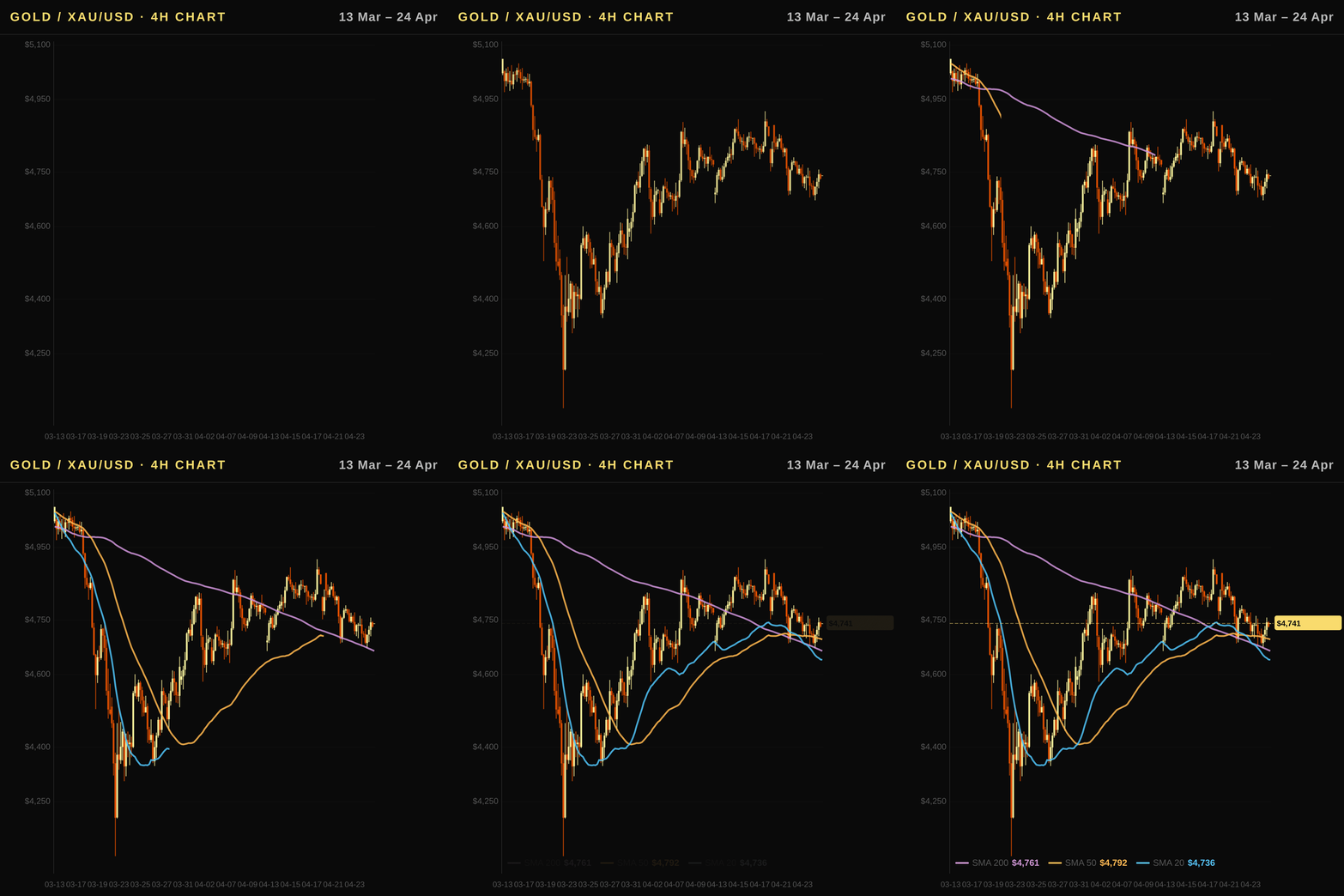
Gold is currently trading at $4,740.9, reflecting a significant -2.4% decline over the last week as traders digest recent volatility. Despite the weekly setback, the metal retains a robust 8.35% gain over the past month and an impressive 42.26% surge year-to-date, highlighting a strong long-term trend that has outperformed equities and bonds. However, institutional outflows of nearly $11.8 billion in March and a shift in speculative net positioning by 4,321 contracts to the downside over five weeks introduce near-term headwinds. The market is poised for a battle between technical resistance near $4,863 and fundamental support from a weakening dollar and persistent geopolitical risk premiums.
Technical Analysis
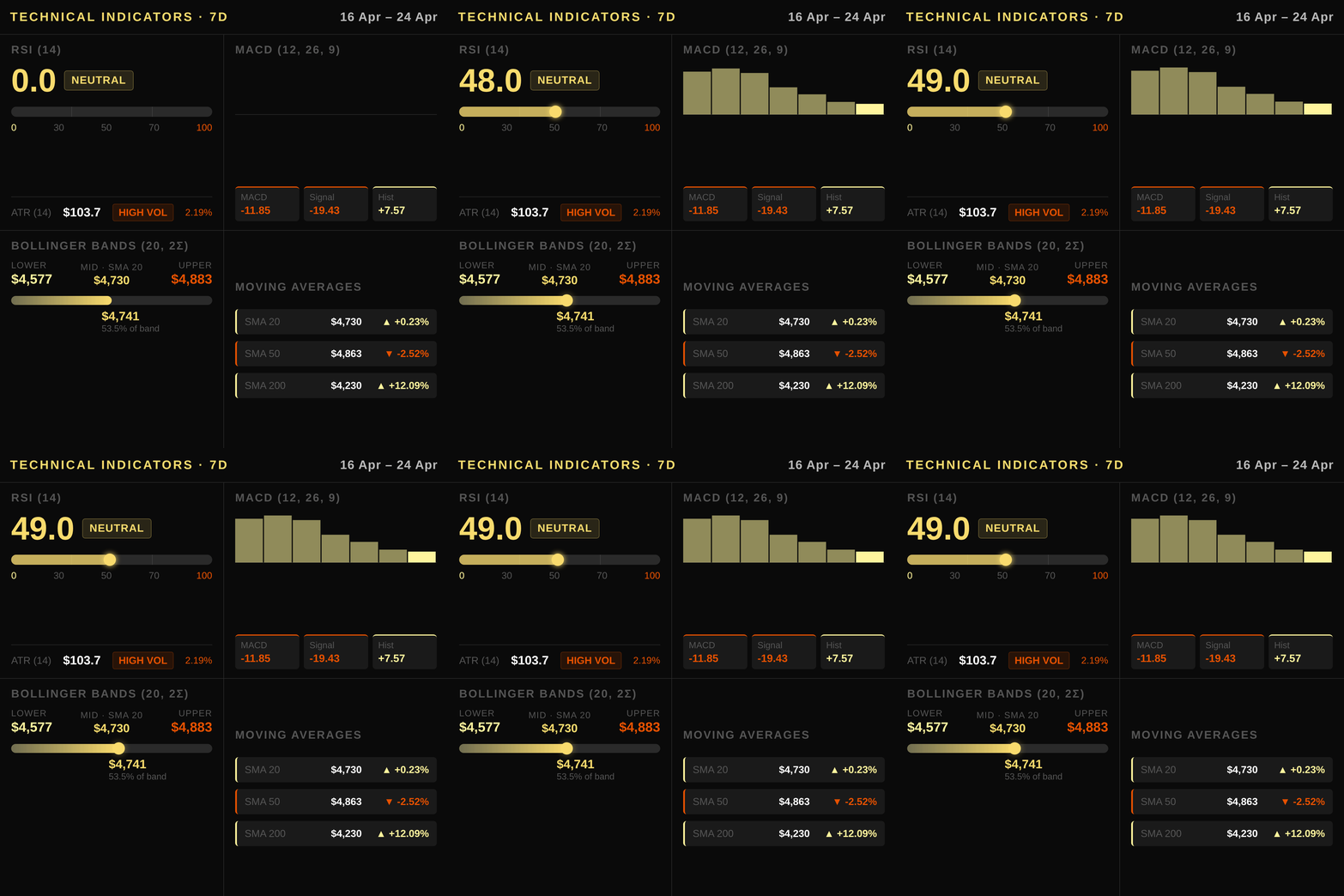
Price action has retreated from recent highs, currently trading just above the SMA 20 ($4,730.0) but well below the SMA 50 ($4,863.4), indicating a short-term consolidation phase within a larger uptrend. The SMA 200 ($4,229.6) remains a critical floor, sitting nearly $500 below current prices, which underscores the strength of the primary trend. Momentum indicators show mixed signals; the RSI (14) sits at 49.0, signaling neutrality and a pause in the aggressive buying seen earlier in the year, while the MACD is negative at -11.85 despite a positive histogram of 7.57, suggesting bearish momentum is currently dominating but may be losing steam. Volatility, measured by the ATR (14) at 103.7, provides context for wide price swings, with the current price hovering within the middle to upper portion of the Bollinger Bands (Upper: $4,882.9, Lower: $4,577.2). Key technical levels to watch are the 60-day high at $5,440.5 as a major resistance ceiling and the 60-day low at $4,100.8 as a structural support zone.
Macro & Fundamental Drivers
The macro backdrop remains highly favorable for gold, driven by a complex interplay of inflation and monetary policy. While the Fed Funds Rate has stabilized at 3.64%, the US 10Y Treasury Yield has ticked up to 4.25%, creating a slightly less attractive yield environment for bonds but keeping real rates moderate at 1.92%. The DXY is trading at 98.51, having weakened recently, which directly supports gold prices by making the non-yielding asset more attractive to foreign investors. Inflation data remains sticky, with the CPI proxy reading a staggering 330.293% year-over-year, a figure that suggests the economy is in a unique regime where traditional disinflationary narratives are stalled, potentially delaying rate cuts and making gold a necessary hedge. Geopolitical tensions continue to provide a risk-off premium, with recent headlines noting that gold is acting as a haven despite Bitcoin's resilience, reinforcing its status as a safe-haven asset distinct from tech-driven digital currencies.
Market Positioning & Flows
Institutional flows have turned negative recently, with Gold ETFs seeing a massive outflow of 84.4 tonnes and $11.8 billion in March, signaling a rotation out of physical and paper gold into other assets. However, the futures market tells a different story regarding sentiment; the COT report from April 21 shows non-commercial net long positioning at 164,006 contracts, with a speculative bias marked as BULLISH. It is worth noting that commercial hedgers are net short at -202,940 contracts, and speculative net longs have decreased by 4,321 contracts over the last five weeks, indicating some profit-taking by speculators but not a fundamental reversal of the bullish thesis. Central bank demand continues to act as a silent buyer, with the top 10 central banks holding 23,123.7 tonnes as of late 2024, providing a foundational floor to the price.
Correlated Assets
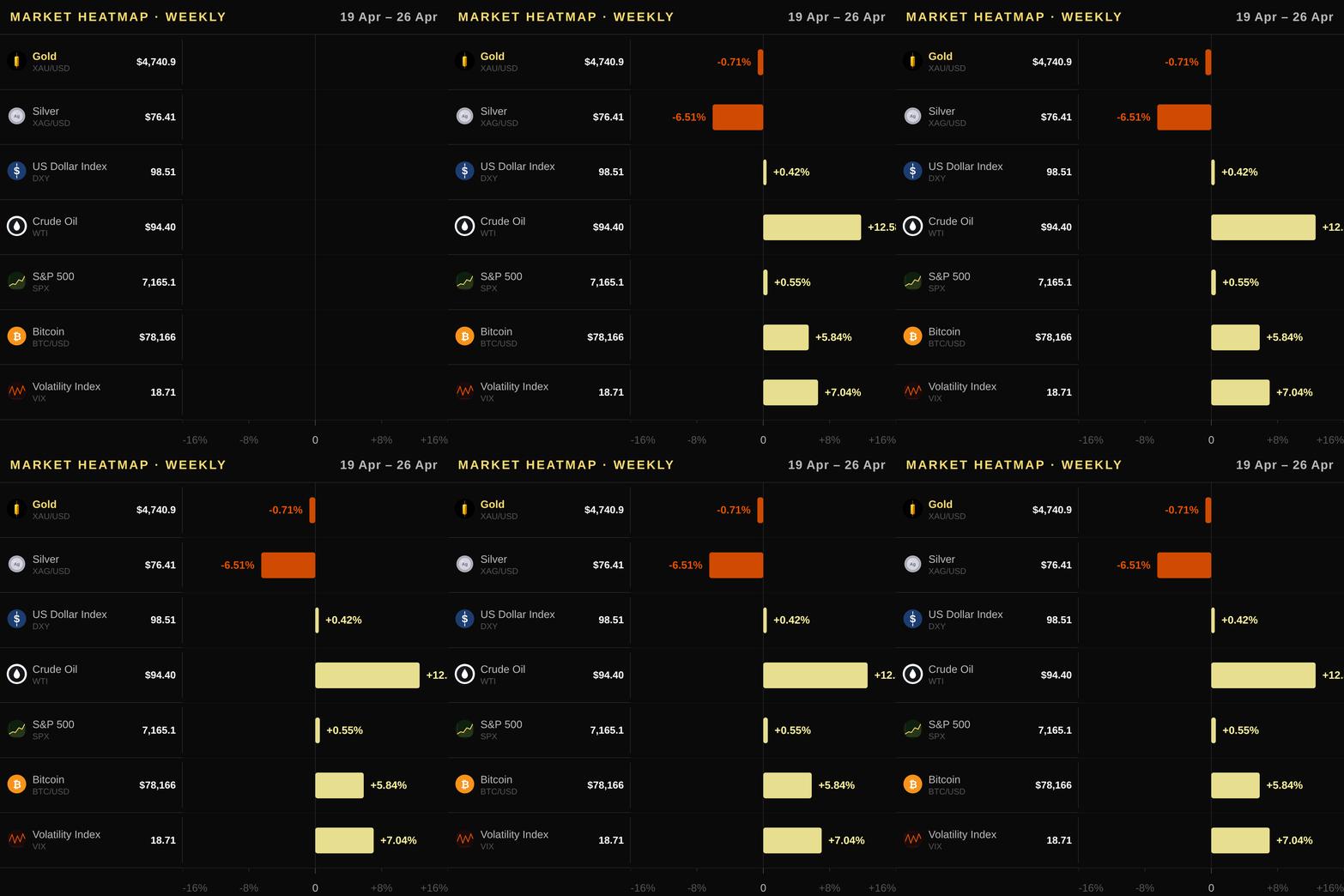
Gold's current performance is supported by a weakening DXY and a rising VIX at 18.71, which has climbed over 54% in the past month, reflecting elevated market fear that benefits safe havens. Conversely, the US10Y yield increase and the rally in BTC (up 2.37% weekly) offer some contrast, with Bitcoin recently outshining gold in media narratives. The Silver market is underperforming relative to gold, falling 6.51% weekly while gold slipped only 2.4%, creating a potential divergence play. The SPX is rising modestly, while WTI Oil is up significantly, suggesting that energy security concerns are priced into the market alongside gold's safe-haven status. The correlation with US10Y is currently negative, as expected, with a correlation coefficient of -0.85.
Risk Factors
The primary risks facing the gold market are inflation persistence and monetary policy tightening. If the Fed decides to raise rates further due to sticky inflation (CPI proxy > 300%), gold could face significant headwinds as the opportunity cost of holding non-yielding assets rises. Geopolitical de-escalation in the Middle East could also reduce the risk premium supporting prices, although the current level of violence seems to have a lasting impact on oil prices and broader market sentiment. Additionally, oversold conditions in the futures market (front-month contract down 0.9%) and the recent institutional outflows suggest that a short-term correction is possible if the dollar strengthens further ahead of the Fed decision.
Strategic Outlook
Looking ahead, the outlook for gold remains bullish despite the recent pullback, provided that the DXY continues to weaken and inflation does not accelerate further. The metal is trading in a range of $4,577 to $4,883, with a strong buy signal from the SMA 20 crossover. The COT report's bullish bias and the central bank accumulation trend suggest that the long-term trajectory is upward, targeting the 60-day high of $5,440. However, traders should be cautious of the institutional outflows and the potential for profit-taking as the price approaches the SMA 50. A break above $4,863 could trigger a rush toward $5,000, a psychological barrier that gold has previously tested and failed to hold, but which could be breached given the current macro tailwinds.
Sector Implications
The gold sector is seeing a divergence between major miners and smaller exploration firms. While Pan American Silver eyes higher output at Cerro Moro, the broader silver market is lagging. This suggests that investors are preferring the stability of gold over the volatility of silver and junior miners during this period of uncertainty. The TSX index, led by tech and energy, is up, but the precious metals sector is struggling to keep pace, indicating a potential rotation back into gold once the dust settles on the Fed decision. The Canadian household balance sheet data showing a boost in financial assets suggests that domestic investors may be reallocating from equities into tangible assets like gold.
Actionable Recommendations
For investors, the strategy should be to accumulate on dips rather than chasing highs, given the recent volatility and institutional selling pressure. A buy signal is active above the SMA 20 ($4,730.0), with a stop-loss suggested below the Bollinger Band Lower ($4,577.2) to limit downside risk. Investors should look for entry points near the 60-day low ($4,100.8) for aggressive positions, but a more conservative approach is to wait for a retest of the SMA 50 ($4,863.4) before adding to positions. The COT report's bullish bias supports holding current positions, but monitoring the VIX and DXY is crucial for timing entries. Diversification with Silver or Bitcoin could be considered to capture potential outperformance in different market regimes, but the core thesis remains centered on gold's safe-haven appeal.
Conclusion
Gold stands at a pivotal juncture, balancing a technical consolidation below its 50-day moving average against a fundamentally robust macro environment characterized by high inflation, a weakening dollar, and persistent geopolitical risks. While the recent weekly decline of 2.4% and institutional outflows of $11.8 billion warrant caution, the year-to-date gain of 42.26% and the bullish COT positioning suggest that the broader uptrend is not broken. The market is likely to oscillate between $4,577 and $5,440 in the near term, with a clear path to $5,000 opening up if the Fed signals dovishness or if the dollar continues its downward trajectory. Investors should remain patient, viewing the current pullback as a potential opportunity to build positions for the long-term appreciation of the world's premier safe-haven asset.
